
Raksa Sok
Esther Mweru
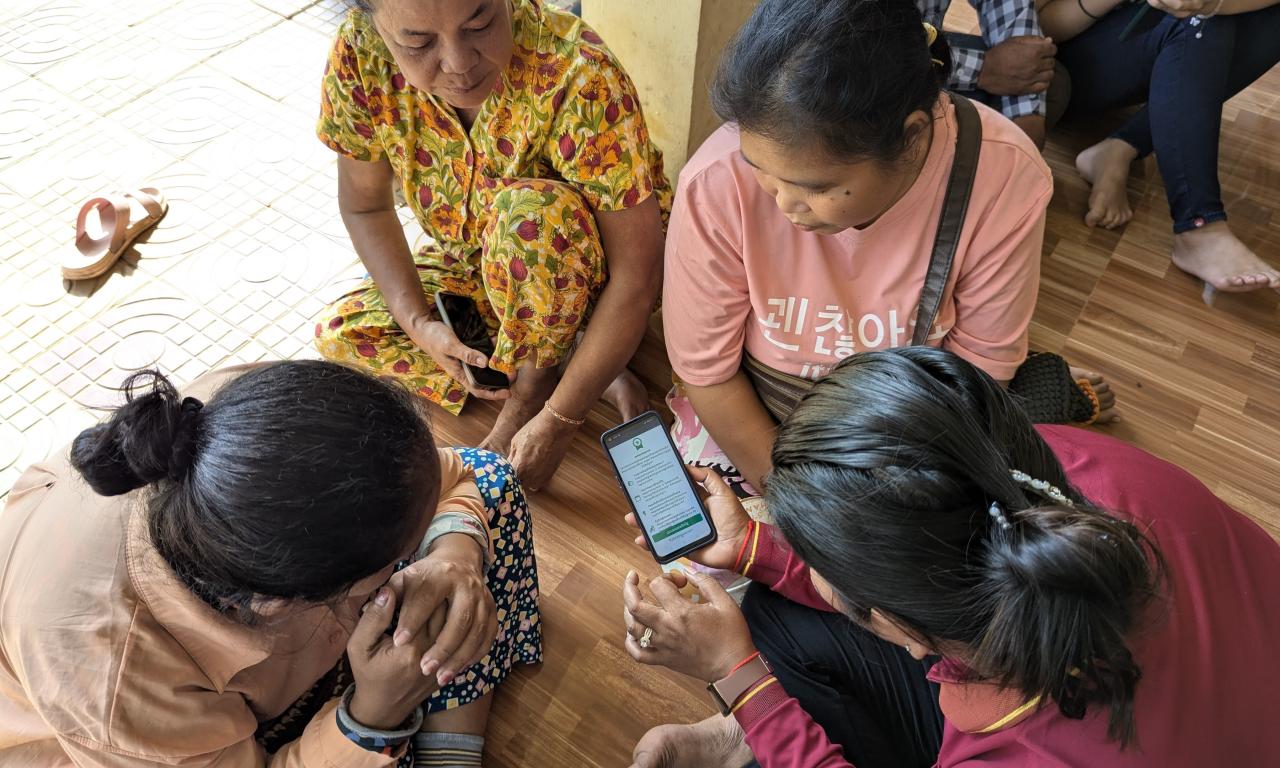
In Kampong Thom, Cambodia, climate change is no longer a distant threat. Erratic rainfall, prolonged dry spells, and sudden flooding are increasingly disrupting rice production and Community Fish Refuge (CFR) management, putting both food security and livelihoods at risk.
For farmers, decisions still have to be made every day, often with limited or unreliable information.
Yet for many rural communities, limited digital access and low digital literacy continue to hinder the use of climate information services.
Bridging the Digital Divide Through Women Leaders
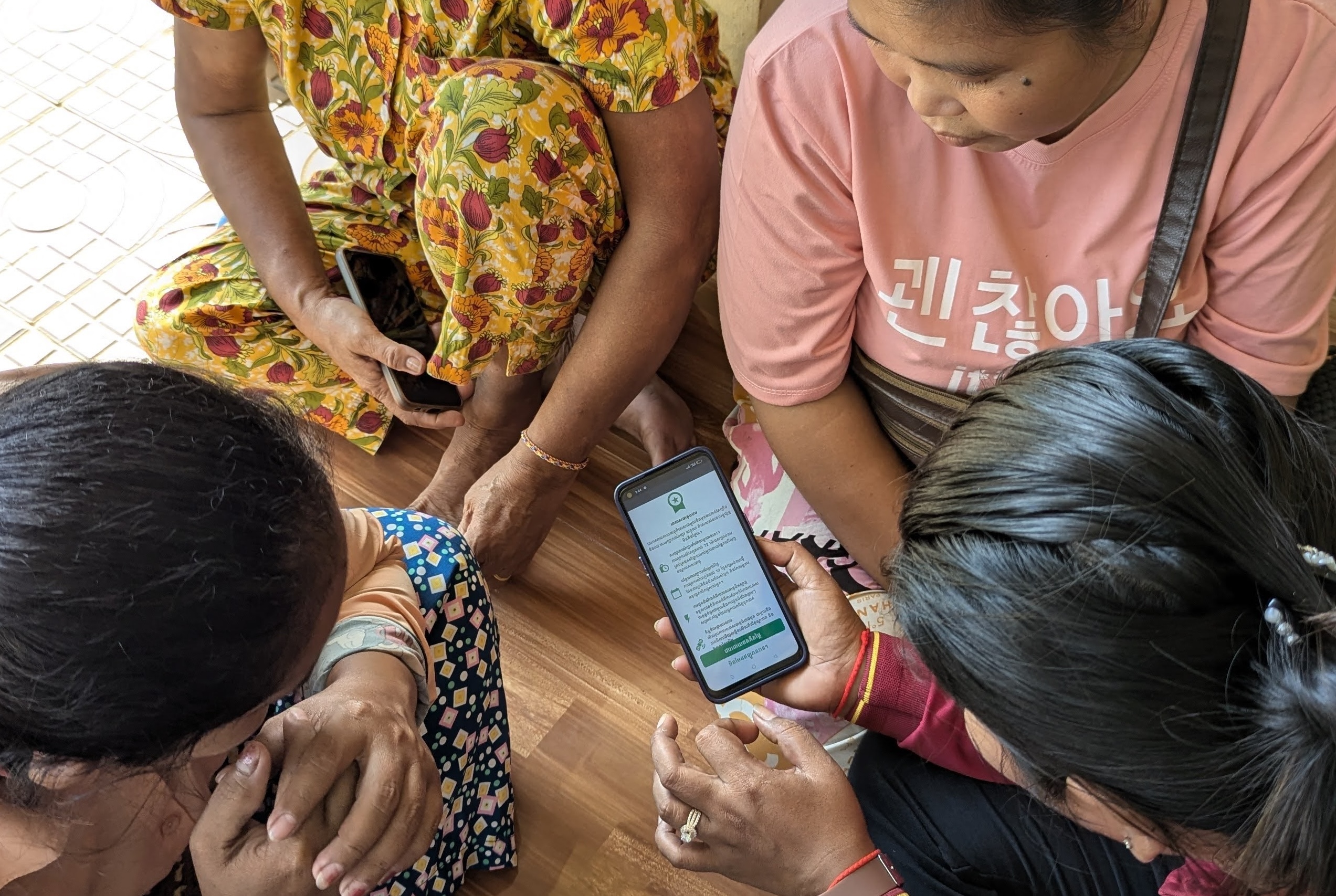
To address this gap, women farmers are stepping into new leadership roles as climate information connectors, bridging the divide between digital tools and community understanding. Supported by the Asian Mega Delta Initiative and the CGIAR Scaling for Impact program, WorldFish, in collaboration with Greenovator, has introduced user-friendly digital solutions such as the Mekong Farm mobile application, which provides real-time weather forecasts, flood and drought alerts, and advisory services tailored to farmers’ needs.

From Information to Action
Through targeted training and ongoing support, women farmers are now able to:
- Interpret weather, flood, and drought alerts in real-time
- Translate technical information into simple, actionable guidance for community members
- Support decision-making for rice farming, home gardens, and fish refuge management
- Ensure early warnings reach vulnerable households, including those without access to smartphones
Before this initiative, many farmers relied on informal knowledge or delayed information, often leading to late planting, poor water management, and avoidable losses. Today, with timely and trusted information, communities are making more proactive decisions, reducing risks and improving productivity.
Community Champion: Mrs. Chea Kong
In Boeung Ream Community Fish Refuge in San Tuk District, Mrs. Chea Kong is playing a vital role in helping her community adapt to changing climate conditions. As a committee member actively involved in local resource management, she has also taken on the role of a digital information champion, supporting fellow farmers to navigate and use the Mekong Farm application.
“We don’t just receive information,” she explains. “We help community members understand it by guiding them on how the mobile application works and how to use its functions for their daily activities.”
Before the introduction of the app, accessing reliable weather information was both time consuming and uncertain. Community members relied on different sources, which were not always accurate or easy to retrieve when needed.
“Before using the Mekong Farm app, we relied on different sources to check the weather. But we were never sure about the accuracy, and sometimes we couldn’t find the information again when we needed it,” she says.
As a result, planning activities were often disrupted by unexpected weather conditions.
Today, access to climate information is faster and more practical, allowing Chea to support both her own work and that of her community. The application provides real-time updates and advisory information in a format that is easy to understand and apply.
“The app saves time and gives information that is relevant and easy to understand,” she adds.
This improved access is already influencing how decisions are made within the community. During a recent Community Fish Refuge activity, Chea and her team used weather forecasts from the app to adjust their work plan in response to high temperatures.
“The forecast showed very high temperatures, so instead of completing all the planned activities, we decided to remove only 50% of the aquatic plants. This helped us avoid working in extreme heat and protect both our health and the fish refuge environment.”
Beyond her own use, Chea also supports other community members in accessing and understanding the information, helping ensure that even those without direct access to smartphones can benefit from timely and actionable climate information.
Overcoming Barriers to Digital Adoption
Despite the progress made, significant challenges remain in ensuring communities fully benefit from digital climate information. Many households have limited access to smartphones, while inconsistent internet connectivity often makes timely updates difficult to receive. In addition, some community members were initially skeptical of digital tools, requiring sustained engagement and trust building to encourage adoption.
To address these challenges, the program combined training sessions, hands-on demonstrations, and peer-to-peer learning, creating an environment where women farmers could gain confidence and become reliable guides for their neighbors. This approach has not only helped overcome technological barriers but also strengthened social networks and community cohesion around climate resilience.
Reaching Communities and Strengthening Resilience
The results of these efforts are already evident across participating communities. Farmers are better prepared to respond to extreme weather events, make timely decisions for their rice fields and home gardens, and coordinate more effectively around Community Fish Refuge management.
Women leaders play a central role by translating technical alerts into practical guidance, ensuring that vulnerable households receive critical information before disasters strike. These efforts are helping communities move from reactive responses to more proactive, informed decision-making.
Women leaders play a central role by translating technical alerts into practical guidance, ensuring that vulnerable households receive critical information before disasters strike. Each partner contributed uniquely to this transformation: Greenovator developed and adapted the digital platform to local needs, WorldFish facilitated community engagement and capacity building, and the Asian Mega Delta Initiative together with the CGIAR Scaling for Impact program provided strategic guidance and financial support to scale the solution. Together, these efforts have helped communities move from reactive responses to proactive, informed decision-making.
Looking Ahead: Scaling Inclusive Digital Solutions
The impact of this work goes beyond access to information. It shows that digital innovation alone is not enough, it ispeople that make technology meaningful and accessible.
Looking ahead, there is significant potential to expand this model to other farmers, while also informing policies on inclusive digital climate adaptation. By investing in women as digital leaders, this approach strengthens community resilience, fosters inclusive decision-making, and ensures that no one is left behind in the transition to climate smart agriculture. The lessons learned here provide a roadmap for scaling similar programs and empowering more communities to harness technology for climate resilience.
Cover photo: Community members in a home-based learning session led by Ms. Chea Kong in Kampong Thom. Photo: Raksa Sok /WorldFish.