
Jörn Schmidt

As leaders gather in Kenya for the Our Ocean Conference, aquatic foods deserve a more central place in the ocean agenda.
Fish, shellfish, seaweeds and other aquatic foods are often discussed in terms of production, trade or conservation. But their value goes much further. They nourish billions of people, support livelihoods across entire value chains and offer practical pathways to more resilient food systems and sustainable blue economies.
The question now is not whether aquatic foods matter. It is whether policy, finance and investment can catch up with the evidence, and support the people and communities who depend on aquatic food systems. By mid-century, the world will need to feed more than ten billion people under increasingly unstable climate conditions. Rising temperatures, volatile markets and accelerating ecosystem degradation are placing unprecedented pressure on global food systems. The challenge is not only producing enough food. It is producing food that nourishes people and can withstand climate extremes.
Climate-proofing the world’s food supply will require foods that deliver high-quality nutrition, have low environmental footprints and remain productive as heat, salinity and water scarcity intensify. Aquatic foods meet this need. The science is ready, and the investment case is clear. What remains is policy recognition and financing at the scale required.
Nutrition and Hidden Hunger
Globally, aquatic foods provide at least 20 percent of animal protein intake for 3.2 billion people. Even more important, they are uniquely rich in high-quality protein and bioavailable micronutrients such as omega-3 fatty acids, vitamin B12, iron, zinc and iodine, nutrients often scarce or less accessible in terrestrial foods. They directly address hidden hunger and can help reduce risks of non-communicable diseases.
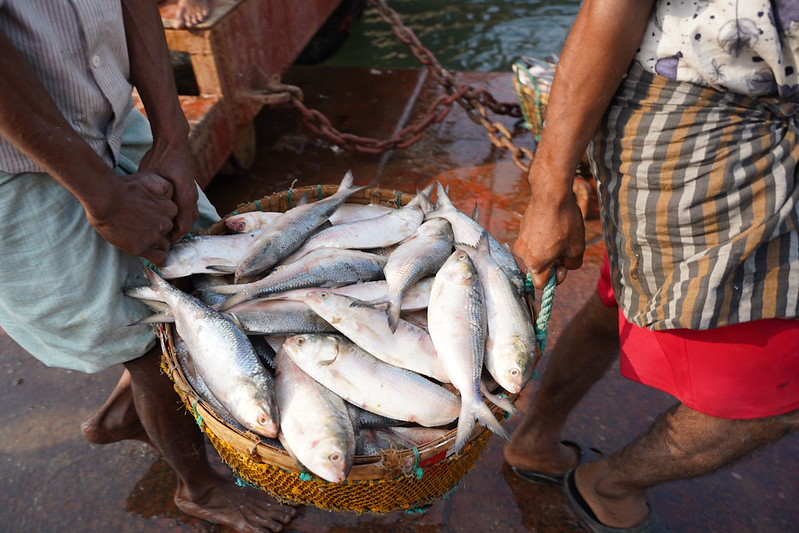
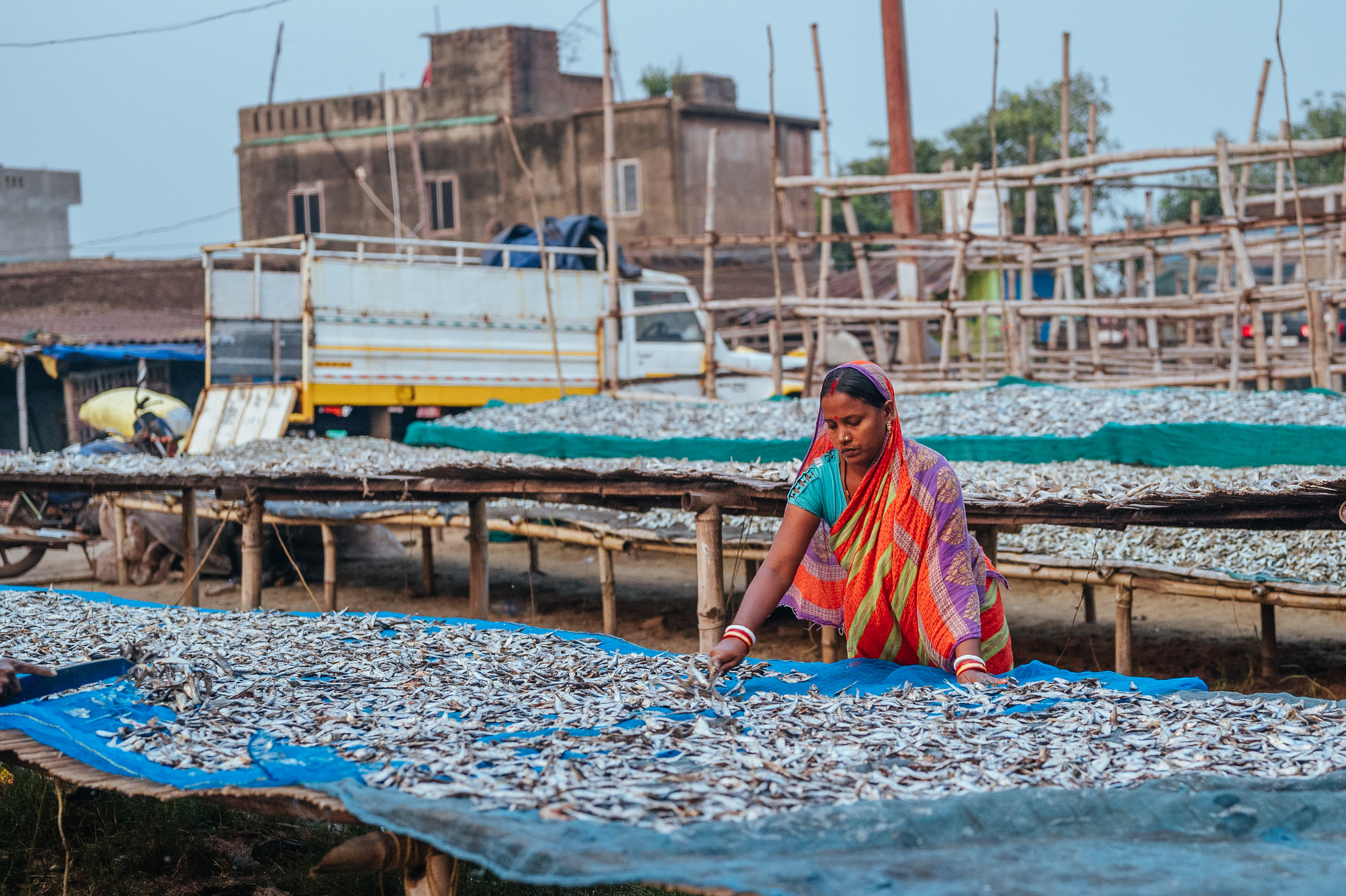
Evidence from India shows that mola, a small indigenous fish, can contribute to improved child nutrition outcomes, while in West Africa, dried fish is a vital source of calcium and iron, especially for inland communities.
Compared with terrestrial livestock, many aquatic species are more resource-efficient, requiring less feed, water and land per unit of protein and emitting fewer greenhouse gases. Bivalves and seaweeds, in particular, have very low environmental footprints and provide ecosystem services such as carbon storage and improved water quality. Regenerative aquaculture models such as integrated multi-trophic aquaculture (IMTA) and silvo-fisheries, as well as effective fisheries co-governance, show how production can align with ecosystem restoration.
This matters because food systems cannot become more resilient through production alone. They also need foods that are nutritious, accessible and suited to a changing climate.
Jobs, Inclusion and Resilience
Over 60 million people work directly in fisheries and aquaculture, with hundreds of millions more engaged across the wider aquatic food value chain. Women play a vital role, particularly in post-harvest and processing, supporting gender-inclusive livelihoods and employment. Sustainable expansion of aquaculture could generate an additional 14–22 million jobs globally by 2050, especially in Africa and Asia, where demand is rising fastest.
In the short term to 2030, employment gains are likely to emerge across the full aquatic food value chain: from fish farming, hatcheries, feed production and small-scale fisheries to processing, cold chains, logistics, marketing, quality assurance and services. In artisanal and small-scale fisheries, the priority will often be less about creating entirely new jobs than upgrading existing livelihoods: improving safety, incomes, working conditions, market access and value addition for fishers, processors and traders.
Over time, mechanization, digitalization and better infrastructure may reduce some forms of low-paid manual work, but they can also create new opportunities in skilled production, services, maintenance, data systems, enterprise development and value-chain coordination.
The private sector will be central. As the sector modernizes, employment patterns will evolve, with growing opportunities in downstream and enabling services, including processing, logistics, quality assurance, digital platforms, entrepreneurship and small and medium enterprises (SMEs) supplying inputs, technologies and niche markets. Cooperatives and producer associations will be essential to keep small-scale actors competitive, enabling them to share infrastructure, pool resources and improve market access.
Investment, Innovation and People
Yet investment is often constrained by uncertainty and risk. Research helps reduce that uncertainty by showing which innovations actually work. But scaling is not only a question of finance and technology. It depends on people.
Shifting consumer preferences toward nutritious aquatic foods, supporting business models that include small producers, and enabling communities to co-manage fisheries and aquaculture are all essential to make growth sustainable.
With investment in skills, research and community-driven enterprises, aquatic foods can provide dignified work for youth and women, and support coastal and rural economies as the sector becomes more diversified and service-oriented.
Strengthening local and regional self-sufficiency is just as important. Small hatcheries, cooperatives, women-led processing groups and community cold-chain systems reduce dependence on imports and keep value within local economies. This matters most in rural and peri-urban areas, where transport and storage are limited and access to fresh and nutritious foods is often most expensive. Without stronger domestic production, import reliance will continue to grow in regions like Africa, raising costs and vulnerability to climate and market shocks.
Still, resilience does not mean closing markets. Regional and global trade stabilizes supply, creates income and improves diets. Regionally traded low-value pelagic species in West Africa feed millions, while high-value aquaculture products such as shrimp and tilapia generate export earnings in Asia and Latin America, support jobs and strengthen national economies.
The future lies in a hybrid model: scaling up domestic production and local processing for resilience and equity, while maintaining well-governed regional and global trade to ensure supply stability, support national economies and diversify diets.
Policy Momentum and COP30
Embedding aquatic foods in global food policy is gaining traction. At the international level, their role has been highlighted at the UN Food Systems Summit, in the Kunming–Montreal Global Biodiversity Framework’s recognition of sustainable use of aquatic resources, and in growing recognition of the ocean–climate nexus within climate policy discussions. To turn momentum into real impact, countries need coherent national and international policies that break down silos between agriculture, fisheries, aquaculture, environment and health. Aligning fisheries management with nutrition objectives, or integrating aquaculture planning with water and climate strategies, creates co-benefits that fragmented policies cannot.
Innovation will continue to drive progress. Digital tools from AI-powered disease detection to catch monitoring platforms like Peskas are improving efficiency and resource management. Advances in genomics, feed alternatives and low-carbon aquaculture technologies offer new opportunities to scale production sustainably. But technology only works when people can use it. That’s why we also need social innovations such as new business models that link smallholders to markets, certification systems that reward sustainable practices, and governance frameworks that empower communities.
Scaling requires more than technology. It depends on sustained investment, strong engagement with the private sector, and the active involvement of communities and governments. Research for development plays a pivotal role by generating evidence that helps de-risk investment and identifies which approaches are viable and scalable.
Confidence comes not only from technology, but from behavior change, inclusive governance and evidence-based policy. It also depends on ensuring that women, youth and Indigenous communities benefit from innovation.
Aquatic foods are not optional. They are a cornerstone of food systems transformation. Without them, we cannot build food futures that are healthier, climate-smart and inclusive.
The next step is not more recognition. It is action that reaches people in their ponds, boats, markets and homes.
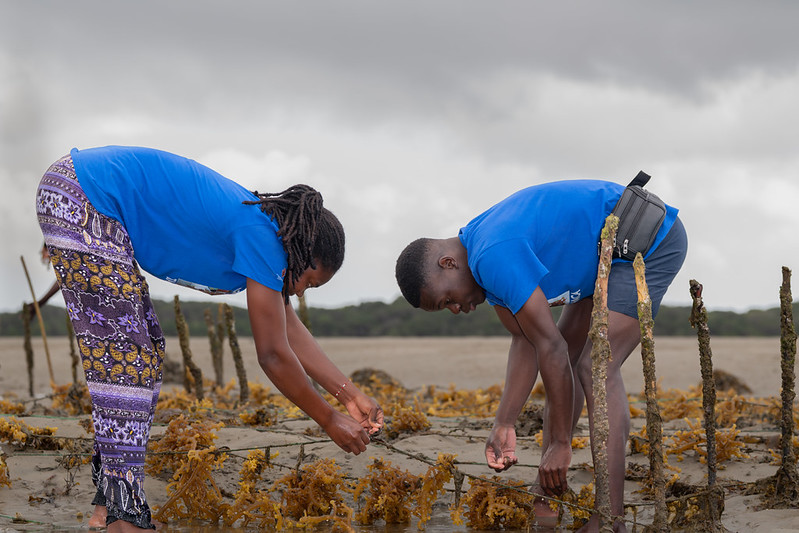
Cover photo: In coastal Kenya, aquatic food value chains support livelihoods from catch to processing and sale. Photo by Festo Lumwe/WorldFish.