
Ahmed Nasr-Allah Mohamed

Menna Mosbah
New research from WorldFish Egypt shows that the Abbassa G15 strain of selectively bred Nile tilapia grew more than 30% faster than a commercial strain, with better survival leading to a 52% increase in net biomass yield under pond conditions.
The findings point to a practical pathway for improving farm productivity and returns without requiring additional land, feed or infrastructure.
Egypt is one of Africa’s largest aquaculture producers, with Nile tilapia (Oreochromis niloticus) dominating farmed fish production, accounting for 61.7% of the country’s total output. However, not all tilapia performs the same. For years, most semi-intensive earthen pond farms have relied on seed stock with unknown or inconsistent genetic potential. The question for both researchers and producers has been: How much of a difference can selective breeding really make?
A new comparative field trial by WorldFish’s genetics team at Abbassa, conducted under the Sustainable Animal and Aquatic Foods Program (SAAF), set out to answer to that question. It evaluated the genetically improved Abbassa Generation 15 (G15) strain, developed through 15 generations of pedigree-based selection against a traditional commercial strain sourced from Kafr El-Sheikh (KSH).
The objective was to compare growth, yield, survival and economic performance to understand which breed offers the greatest benefit to Egyptian fish farmers.
What The Trial Set Out To Do
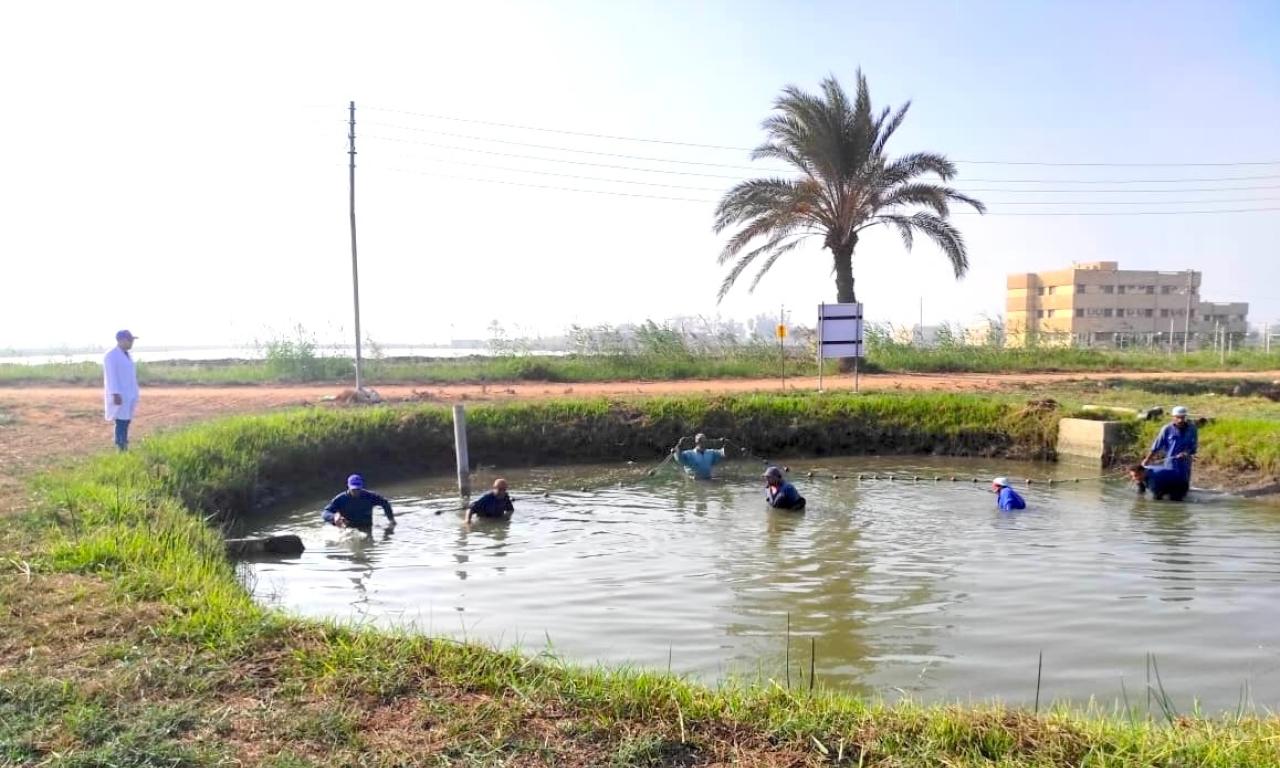
It was designed to reflect semi-intensive earthen pond farming conditions in Egypt, so the results would be relevant to commercial producers. Researchers compared growth performance, survival, biomass gain and economic return across the two strains. The two strains were stocked in replicated earthen ponds at a density of 3 fish per square meter and monitored from July to December 2025.
“Every fish was individually tagged using passive integrated transponder (PIT) technology, allowing our team to track growth trajectories and performance metrics on a per-fish basis throughout the culture period. All eight ponds shared a single water source and a common drainage system, a design feature that ensured consistent water quality across all experimental units,” said Sameh Attia, Postdoctoral Fellow, WorldFish, Egypt who supervised the study in Abbassa
What The Results Show
Preliminary results showed that Abbassa G15 fish reached over 500 grams on average, had a 30-32% higher final body weight compared to the KSH strain and also achieved a higher survival rate.

What Could This Mean for Farmers and the Sector?
For the sector, the trial results indicate that adopting the Abbassa G15 strain on just 10% of semi-intensive farms could increase national tilapia output by over 43,000 MT annually, generating an estimated 1.18 billion EGP in added value. For farmers, faster growth means shorter production cycles, better pond turnover and lower risk. Heavier fish at harvest mean more kilograms to sell per feddan.
Because the gains come from improved genetics rather than expanded production area, the results suggest a cost-effective route to increasing productivity.
“Over more than two decades, WorldFish has demonstrated the power of selective breeding by continuously improving the Abbassa strain. Each generation has shown measurable gains, with the 15th generation (G15) now clearly outperforming both earlier generations and other strains currently available in Egypt. G15 will soon be available for farmers to adopt, helping to boost productivity, increase farmers’ incomes, and make affordable, nutritious food more accessible to a growing population,” said Matthew Gray Hamilton, Senior Scientist, Aquatic Animal Genetics Lead, WorldFish
The trial research paper with complete results and dissemination scenarios is expected to be published soon.
Cover photo: Harvesting the comparative trial of the selectively bred Abbassa G15 and KHS Commercial strains at WorldFish facility in Abbassa, Egypy. Photo Mai Rafeek/WorldFish.