
Samiya Ahmed Selim
This article is part of the Asia–Africa BlueTech Superhighway project’s work to share learning on coastal fisheries management, community stewardship, and inclusive aquatic food systems. Drawing on the Cox’s Bazar case study, it explores how incentives such as rice compensation, alternative livelihoods, and community-based management can support conservation while helping fishing households cope with seasonal closures and economic pressure.
Fishing communities in Cox’s Bazar depend heavily on the sea but face growing environmental and economic pressures. Seasonal fishing closures, paired with incentives, aim to rebuild fish stocks while supporting the well-being of local communities.
Bangladesh’s coastal ecosystems support millions of people whose livelihoods depend on fisheries, biodiversity, and the overall health of the Bay of Bengal. The hilsa fishery — nationally iconic and economically vital — has long been central to conservation policy, supported by seasonal fishing bans designed to protect spawning and nursery grounds.
While these bans help sustain fish stocks, they also temporarily reduce income and food for small-scale fishing households. To ease these impacts and encourage compliance, the government has introduced a range of incentives, including rice compensation, alternative livelihood support, and community-based management.
Government-led incentives in Bangladesh
1. Rice Compensation
To help offset the cost of fishing bans, registered fishing households receive rice from the government under a formal social protection program, the Rice Compensation Scheme (RCS). The Ministry of Fisheries and Livestock distributes 30–56 kg of rice per household during both the 22-day hilsa spawning ban and the 65-day marine fishing ban.
2. Alternative Livelihoods
Alongside food support, the Department of Fisheries (DoF) helps households increase income outside of fishing through the Alternative Livelihood Support Program (ALSP). The government implements this program in partnership with NGOs and other organizations that provide training, small grants or loans, and in-kind support.
3. Community-Based Management
Community-based fisheries management (CBFM) is a decentralized approach in which marine resources are jointly managed by the government and local communities. This takes the form of co-management agreements that share responsibilities between the DoF and local community groups.
These groups are granted exclusive access to fishing areas, alongside responsibility for their sustainable use. They take an active role in monitoring activities, raising awareness of seasonal bans, discouraging the use of harmful gear, and promoting more sustainable practices.
These government programs operate nationwide and are often delivered with support from NGOs and other partners, with impacts and outcomes varying across regions, communities, and projects.
The Incentive Landscape in Cox’s Bazar
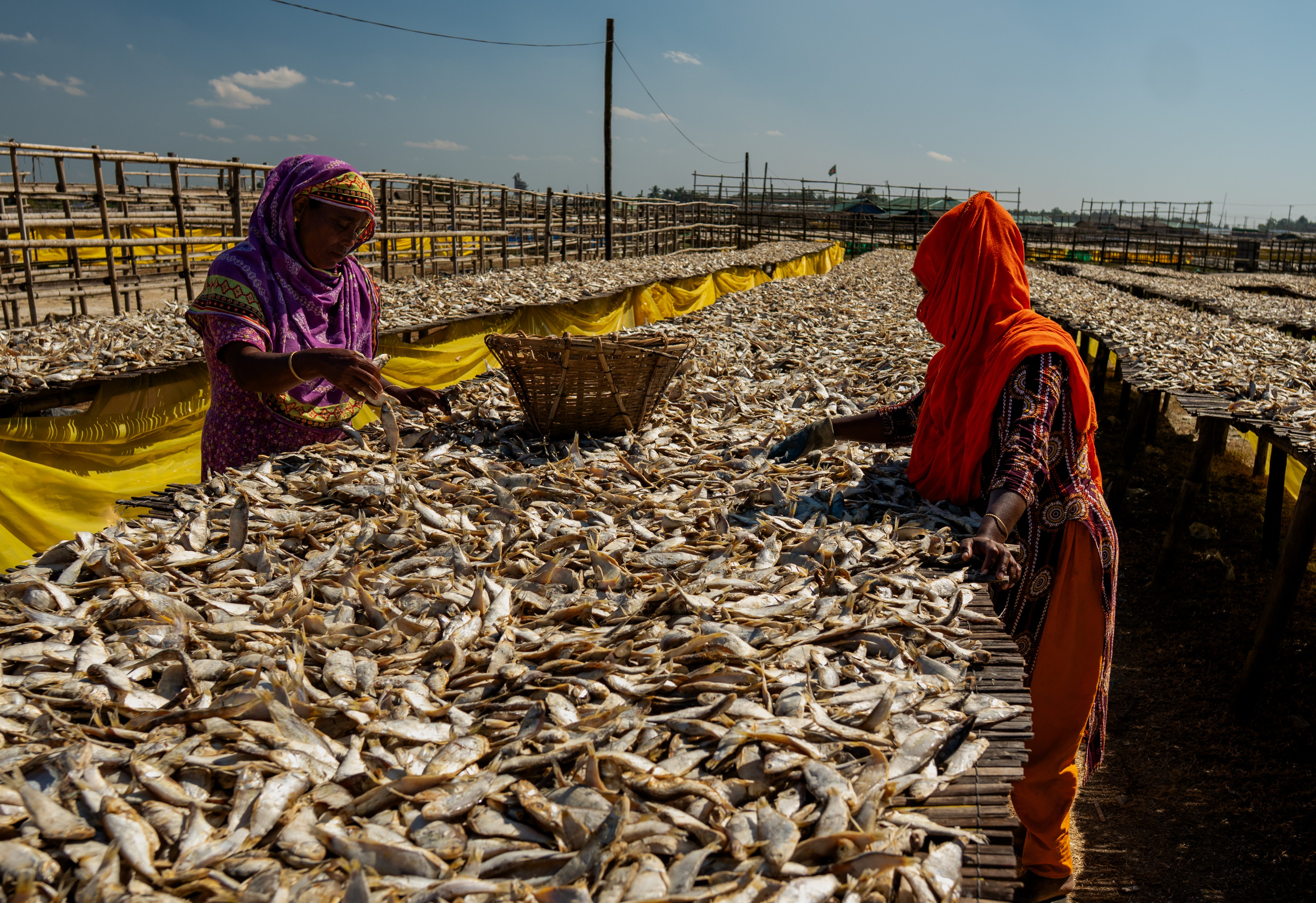
Cox’s Bazar, a coastal district in southeastern Bangladesh, is one of the few places where all three incentives overlap, creating a rich landscape of economic and social support. The region is also shaped by wider pressures, including climate change, industrial trawling, and the arrival of more than one million Rohingya refugees since 2017.
In addition to government delivery of the RCS, two major projects have supported alternative livelihood development and community-based management in Cox’s Bazar: Enhanced Coastal Fisheries in Bangladesh II (ECOFISH II) and the Bangladesh Sustainable Coastal and Marine Fisheries Project (BSCMFP).
ECOFISH II aimed to strengthen the resilience of coastal fisheries and secure food and income benefits for fishing communities. Implemented with the DoF and partners, it promoted co-management and supported alternative livelihoods by providing goats, poultry, and small-business support, as well as training in aquaculture and animal husbandry.
BSCMFP expanded ALSP across 450 villages and aimed to improve co-management of coastal and marine fisheries, reduce poverty, and support environmental sustainability. It was a government program implemented by the DoF with support from the World Bank, and emphasized women’s participation, value-chain activities, and financial inclusion through savings groups.
In Cox’s Bazar, both projects also carried out awareness-raising activities. Fishers received training on the environmental impacts of destructive fishing gear and the purpose of seasonal bans, including alternative activities that could be undertaken during closure periods.
These activities aimed to complement incentives by communicating the conservation goals behind the restrictions, fishers’ roles as stewards of the ecosystem, and the support available to help households cope during closure periods.
Did the Incentives Meet Their Objectives?
The fishing bans, along with the incentives and awareness-raising activities intended to support compliance, were widely seen as essential to maintaining the hilsa fishery's productivity.
As one DoF interviewee noted, “If the hilsa ban were removed, stocks would collapse within five years.”
In Cox’s Bazar, these combined measures were associated with a range of behavioral, ecological, and socio-economic changes, although the strength of evidence varied across outcomes.
Outcome 1: Increased Awareness
According to three key informants from NGOs and the government, awareness of conservation measures among fishers increased, particularly regarding the value of seasonal bans, as a result of BSCMFP's awareness-raising activities.
As one government official said, “fishermen have gained the necessary knowledge and skills to conserve the maritime environment while practicing sustainable fishing... combined efforts of rice compensation, alternative livelihood support, and community-based fisheries management interventions have produced greater awareness among fishers."
Many fishers recognized the purpose of the closures and their link to future catches.
As shared by a fisher from Moheshkhali, “the surge of some species of fish has been profitable because they come out of the protected areas and help fishermen make some money.”
Outcome 2: Increased Compliance
Awareness-raising activities also contributed to increased compliance.
For example, ECOFISH II reports indicate that compliance improved in areas where outreach activities among fishers about harmful gear, such as behundi jal nets, took place. They also highlight that the RCS contributed to increased compliance with the fishing bans. However, important barriers remained.
Access to rice support was limited to registered small-scale fishers with official ID cards, excluding many households that depend on fishing.
According to a District Fisheries Officer, “only around a quarter of fishers have an ID card. The rest rely on fishing but receive no benefits.”
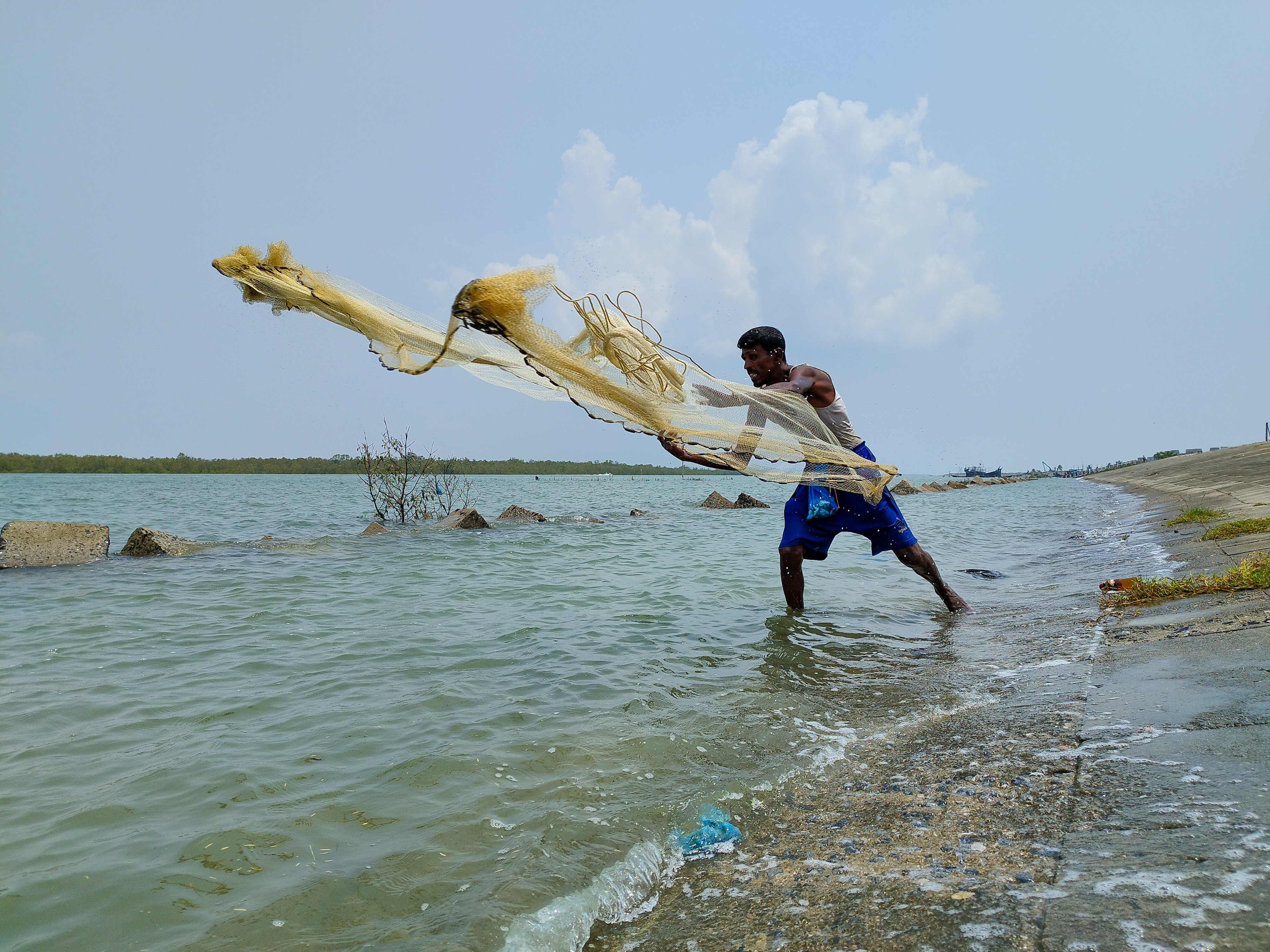
A local fisheries officer described the exclusion of unregistered fishers as “the single biggest gap”, noting that those without ID cards often seek alternative income or continue fishing during the ban:
“Fishers who do not have a Fisher ID card know they will not get any help. They have accepted their fate. Therefore, they look for other alternatives even before the fishing ban starts. I think we need to think of these people too.”
Even for registered households, rice compensation provided only temporary relief and was insufficient to build long-term resilience, particularly for women who often face restricted mobility and limited economic opportunities.
These shortcomings meant that compliance was not guaranteed, and illegal fishing in the nearshore waters of Cox’s Bazar spiked after 20–27 days of the ban.
NGO project staff in Cox’s Bazar explained, “when people cannot access the deep sea, they fish in the seashores. Thus, the crowd of fishermen fishing in the seashore increases.”
Conservation gains, and efforts to bring fishers on board with management measures, were also undermined by illegal industrial trawling.
As one NGO staff member explained, “illegal trawling within 40 meters kills everything — small fish, juveniles, turtles.”
Outcome 3: Decreased Dependence on Fishing
Alternative livelihood activities helped some households reduce reliance on fishing. These were better adopted when community groups had a role in selecting beneficiaries and monitoring use.
In the Cox’s Bazar region, ECOFISH II supported 2,429 households with livestock and small enterprise inputs. At a broader scale, the BSCMFP program reported having engaged 43,701 households in fishing communities across the country in alternative livelihood activities. Although the number of households involved in these activities in Cox’s Bazar across both projects could not be confirmed, women made up around half of participants in related training activities. For example, in the ECOFISH II project, the final report shows women at 45–55% across livelihood and skills training.
However, a District Fisheries Officer cautioned, “The incentives provided to fishers are very short-term, no matter which organization is working in this sector, their impact remains limited.”
Outcome 4: Improved Food and Nutrition Security
Food and nutrition also improved for some households. ECOFISH II documented improved food and nutrition outcomes for more than 5,800 people.
Outcome 5: Improved Financial Resilience
Under the BSCMFP, 4,500 savings groups were established nationally. Many of these were led by women and strengthened financial resilience. Collective savings reached approximately BDT 3.73 million, improving access to small loans and reducing reliance on moneylenders. Under ECOFISH II, 148 community savings groups were formed, which involved 5,180 women. Furthermore, fisherwomen received soft loans from this fund, which they reinvested in different businesses such as tailoring, goat rearing, commercial gardening and other such activities.
An Unintended Outcome: Introduction of an Additional Incentive
Although not initially part of the ECOFISH II project plan, ECOFISH staff responded to emerging concerns about declining turtle populations in the region by introducing an additional conservation incentive.
Community members were offered BDT 100 for each olive ridley turtle egg collected and safely transferred for hatching. This encouraged fishers and local residents to protect nests to improve hatchling success, resulting in around 500–600 eggs hatching successfully, illustrating how new incentives can emerge during implementation as an adaptive response to local environmental challenges.
Key Takeaways
The Cox’s Bazar case study highlights both the possibilities and the limitations of incentive-based approaches for sustaining fisheries and supporting resilient fishing communities in Bangladesh.
1. Monitoring Ecological Outcomes Remains Limited.
Outcomes around increased awareness and short-term compliance were identified, but evidence of long-term ecological recovery was weak. Monitoring and evaluation are poorly embedded in project cycles, and data on long-term ecological impacts—such as hilsa stock recovery, reduced bycatch, or improved breeding success—are largely absent. These gaps point to a persistent disconnect between incentive delivery and conservation performance metrics.
2. Incentives are More Effective When Paired with Strong Governance and Coordination Across Institutions.
Implementation depended on collaboration between government agencies, NGOs, and local communities.
3. Registration Gaps Undermine Compliance.
Access to RCS and related support depended on fishers having official ID cards, which excluded many fishing boat crew members, seasonal fishers, and women in post-harvest roles. As a result, some fishing-dependent households received no support and continued fishing during bans to meet their food, nutrition, and income needs.
4. Rice Compensation Alone is Insufficient to Sustain Compliance.
Rice transfers helped households cope during closures but rarely covered the full duration of bans. When compensation was insufficient or delayed, fishers continued fishing to survive, undermining conservation outcomes. This supports findings from earlier studies in Bangladesh that bans alone are ineffective without adequate compensation.
5. Interventions Need to be Adaptive and Responsive.
ECOFISH II and BSCMFP evolved over time and responded to local needs, such as through the development of the turtle nest protection incentive. By contrast, the RCS has remained largely unchanged despite long-standing concerns around adequacy and registration gaps.
Looking Forward
This case study demonstrates that incentives can shift behaviors and support conservation — but only when embedded within strong institutions, reliable funding, and inclusive participation. Incentives have been numerous — rice compensation, alternative livelihoods, co-management arrangements — yet fishers in Cox's Bazar consistently reported exclusion, inadequacy, and a lack of meaningful participation in the decisions that shape their lives.
This is not a localized failure; it reflects systemic problems of registration biases, top-down governance, and underfunding that characterize coastal fisheries management nationally. However, Cox’s Bazar is now entering a new phase shaped by the arrival of several major initiatives that signal a shift toward long‑term, place-based incentives. A key example is the Sustho Sagor (“Healthy Ocean”) project, a $5.5 million Blue Action Fund partnership led by WCS and WorldFish, which aims to expand Bangladesh’s marine protected area network and strengthen community-led stewardship across more than 12,700 km² of critical marine ecosystems.
By reinforcing protection of existing MPAs and establishing new conservation zones—including the country’s first Other Effective Area-Based Conservation Measure—the project intends to reshape incentives in Cox’s Bazar by linking compliance, biodiversity monitoring, and community benefits more directly to national conservation goals.
Alongside this, the Fisheries Livelihood Enhancement Project, funded by JICA and currently being implemented in Cox’s Bazar, aims to strengthen the resilience of artisanal fishing communities through livelihood support and capacity building. These new investments mark a transition away from short-cycle donor projects toward more formalized systems.
These shifts align with broader national policy changes that will directly influence incentives in Cox’s Bazar. The National Fisheries Policy 2025 strengthens the government’s mandate for MPA expansion, ecosystem-based management, and stricter regulation of industrial fleets, creating a policy environment that favors conservation-linked incentives and more robust enforcement.
At the same time, reforms under the National Social Security Strategy aim to improve targeting and delivery of social protection, potentially expanding coverage for small-scale fishers who currently lack ID cards and receive no benefits.
Together, these developments suggest that incentives in Cox’s Bazar—and Bangladesh more broadly—are moving toward more formal, place-based, and state-driven systems. The challenge will be ensuring that these new frameworks remain inclusive, particularly for marginalized fishers, women, and youth, and that the ecological gains from new MPAs and infrastructure translate into real livelihood security rather than exacerbate inequities.
Further Reading
– IIED Policy Brief on Incentives for Coastal Fisheries Strengthening incentives for coastal stewardship in Bangladesh | WorldFish
–– ECOFISH II publications (WorldFish Digital Archive) Women’s Economic Empowerment and Hilsa Fisheries: Experience in ECOFISH Activity
About the Author: Dr Samiya A. Selim is an interdisciplinary sustainability scientist with over 20 years of experience at the intersection of climate change, coastal livelihoods, gender and natural resource governance. She holds a PhD in Biological Sciences from the University of Sheffield, UK. Her research focuses on climate adaptation, gendered vulnerability, and participatory approaches to environmental governance in coastal social-ecological systems, with particular expertise in Bangladesh and the wider Global South. She serves as the Country Coordinator for the V2V (Vulnerability to Viability) Global Partnership on small-scale fisheries across 12 countries. She is Acting Knowledge Committee Member of the International Panel for Ocean Sustainability (IPOS) and Co-Chair of the Human Dimension Working Group of IMBER. She has published 37 peer-reviewed journal articles, two edited books (Routledge), and policy briefs for WorldFish, IIED, UNDP, and FCDO. For the Asia–Africa BlueTech Superhighway project, she contributed expertise on fisheries governance, incentive-based approaches to coastal conservation, and institutional and policy frameworks for coastal stewardship in Bangladesh.
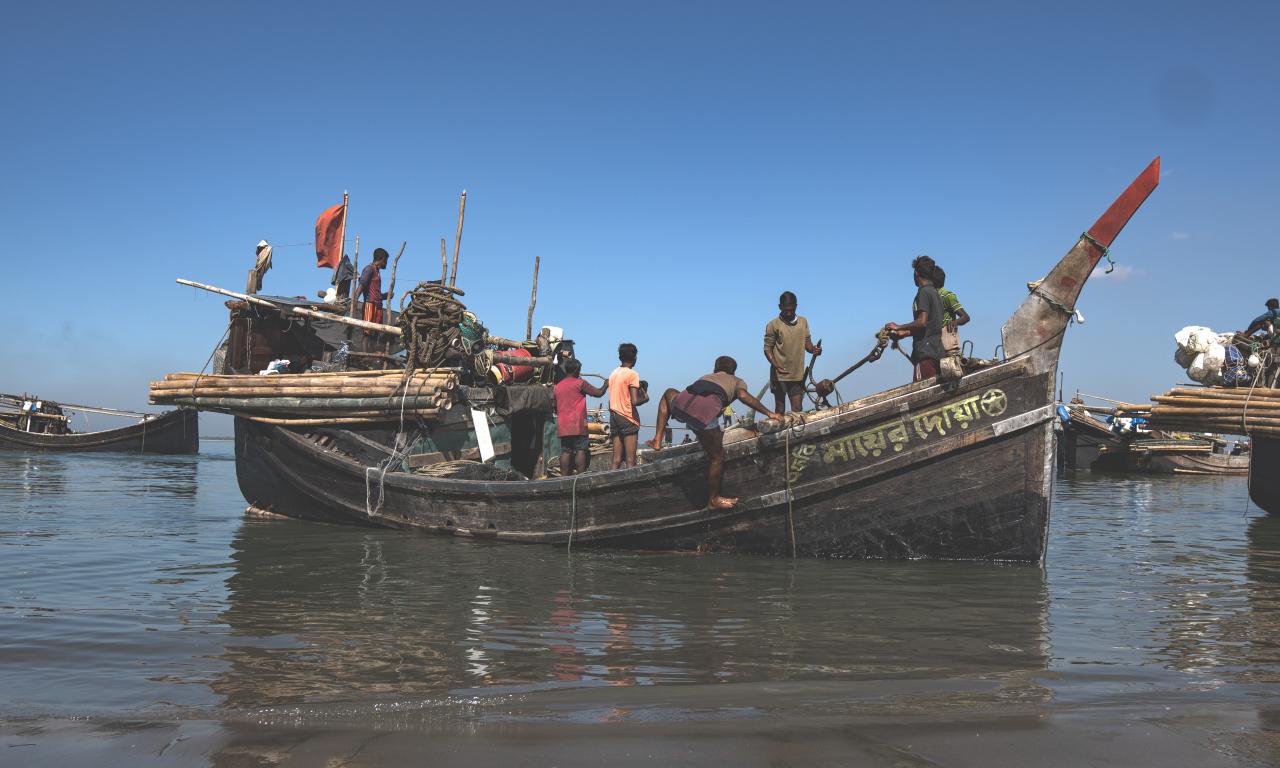
Cover photo: Fishers are preparing their boat at Najirar Tek, Cox's Bazar. This is soon after the government-mandated fishing ban ends, and they resume their livelihoods. Photo: Hamid Hossen.