
Catherine Muyonga
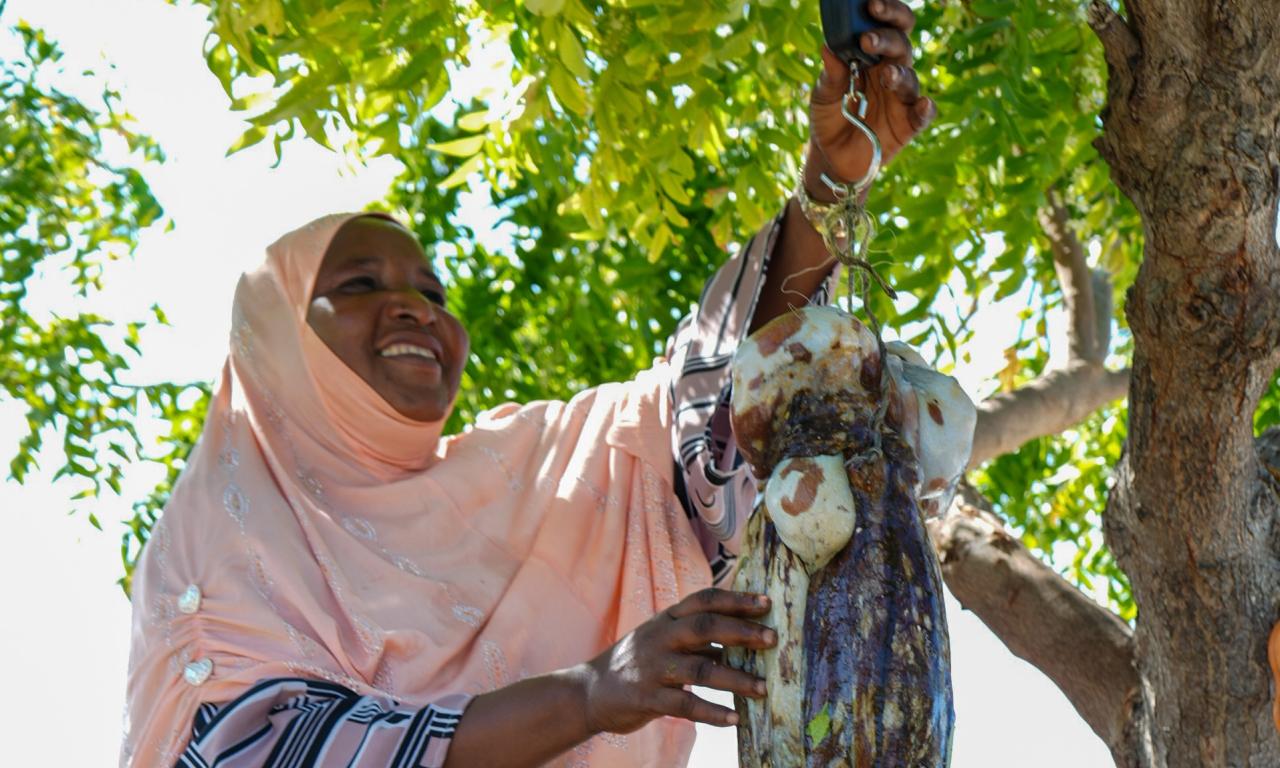
For many people, octopus brings to mind a gourmet dish in a high-end restaurant. But in Songo Songo, Tanzania, it is the foundation of local livelihoods and a vital source of household income.
Songo Songo is an island known for its blue waters, beautiful beaches and octopus fishery. Most of its inhabitants rely on the ocean for their primary source of income.
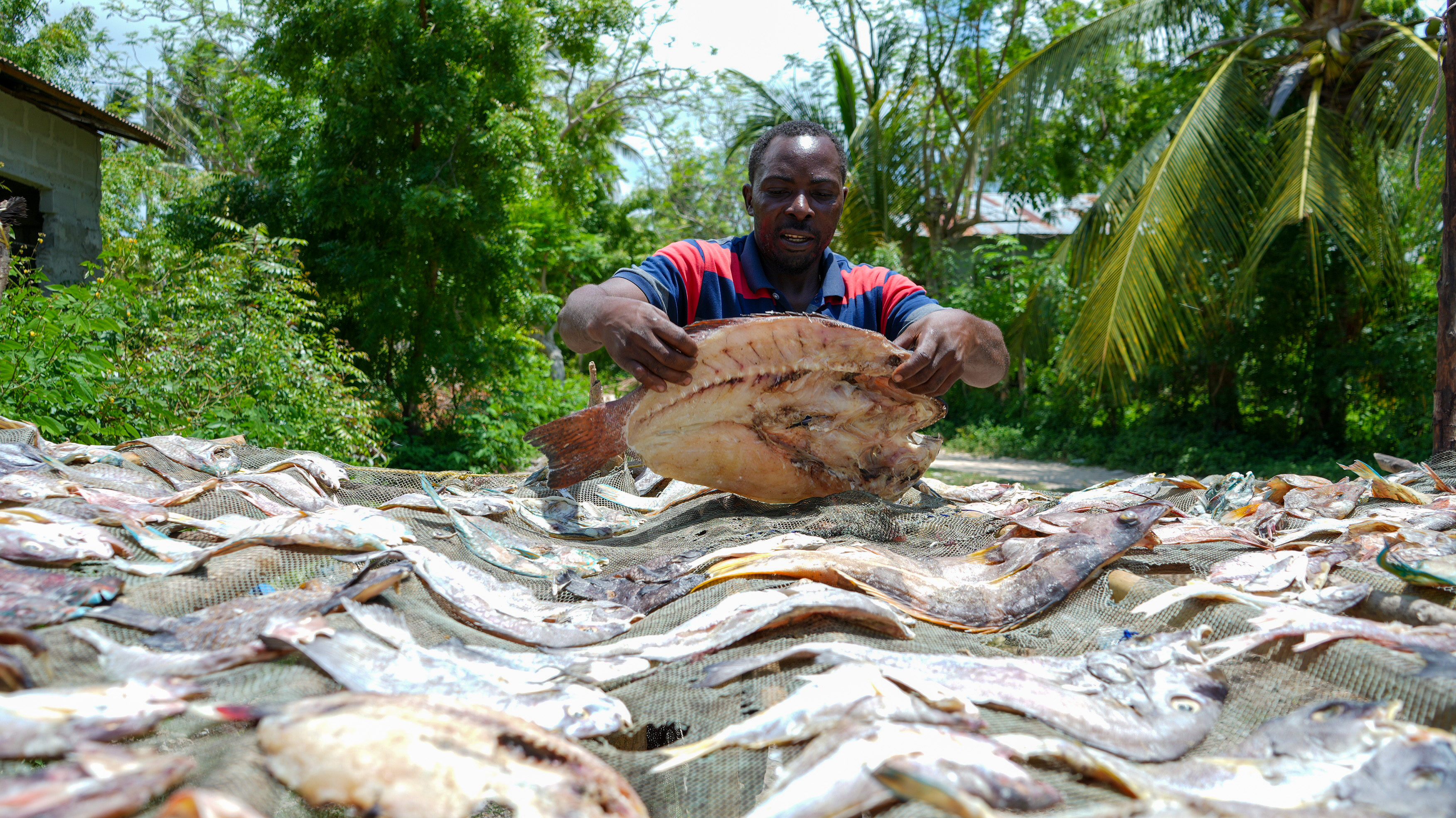
Ali Kambwili, a fish and octopus seller, said, “If you went around Songo Songo today looking for a gardening hoe (Jembe), you would be lucky to get even three. Our livelihoods are centered on the ocean. We are fishers. We sell fish and practice seaweed farming. The ocean is our lifeline and making a living from it is a tradition passed down through generations.”
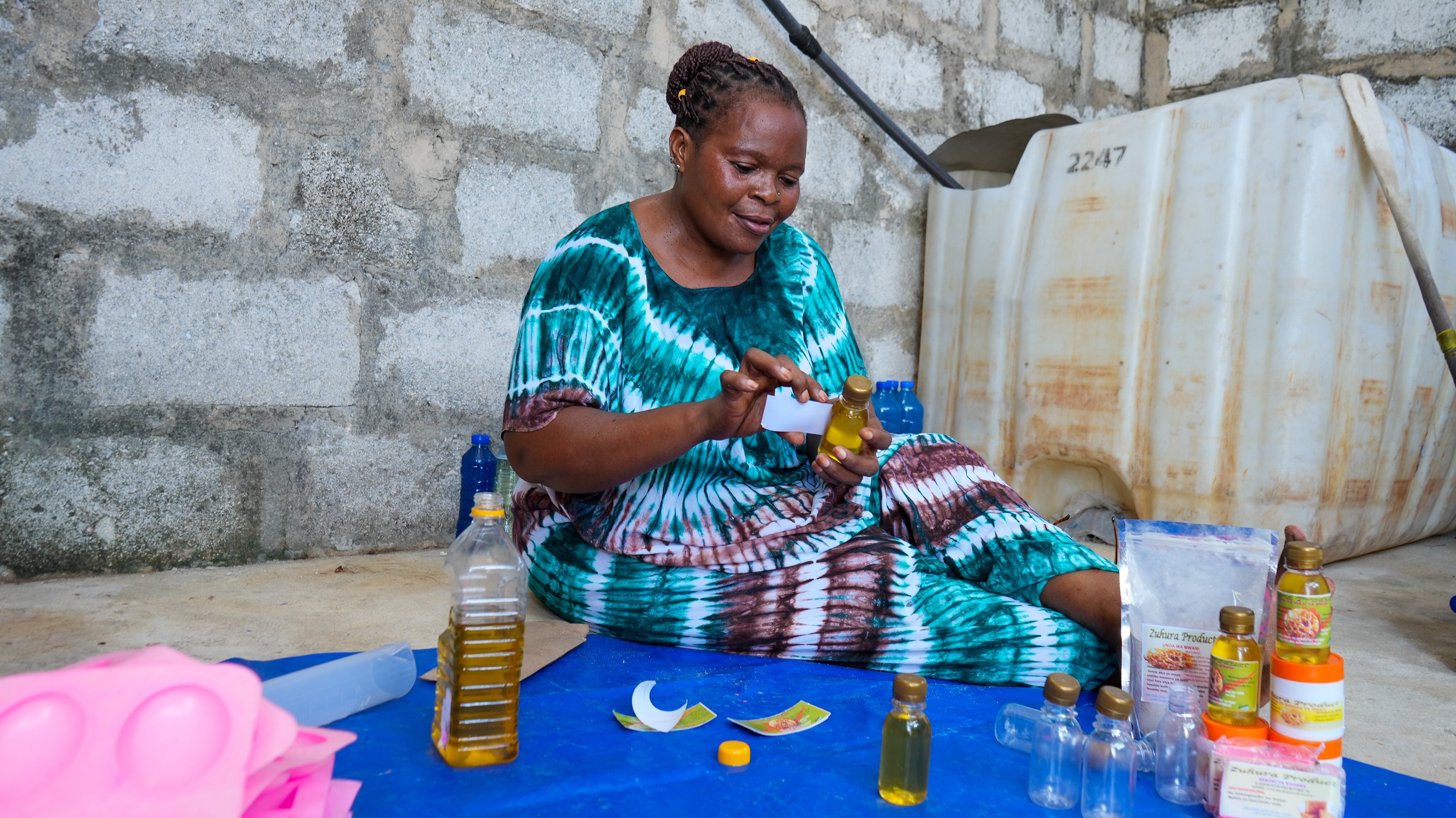
A Closure Built Around Local Incentives
In 2017, the Songo Songo community undertook an experimental conservation and fisheries management initiative by setting aside a small section of their fishing grounds as a temporary closure to allow octopus populations to grow and reproduce. The hope was that this would lead to a healthier marine ecosystem, better harvests, and increased financial gains.
Rather than relying on restrictions alone, the closure created a positive economic incentive by giving fishers and traders the chance to earn higher revenues from the sale of larger and more abundant octopus.
Eight years on, the octopus closure has produced clear economic benefits that extend beyond the fishery itself. Fishers and local traders describe the initiative not as a short-term fix, but as a shift in how the local economy functions.
“Having an octopus closure in our community has been life changing. We have so far established a reputation for ourselves as a source of good quality octopus. Major seafood companies have now set up offices in our community, eliminating external middlemen and extra expenses related to transport, refrigeration, and manpower. The money we get from selling octopus is retained within our community,” said Bi. Mdogo Issa, an octopus trader.
But progress has not come without challenges for Songo Songo.
During the fourth octopus harvesting event in 2019, the community faced a setback. Five tons of octopus were lost to spoilage due to a lack of proper storage facilities, causing significant financial losses. Following the loss, the World Wildlife Fund supported the construction of an ice-making plant. This helped address the spoilage issue and created an additional economic opportunity for local small-scale fish processors and vendors selling other perishable food items, who now rely on the facility for ice. Today, however, demand for ice has outgrown the plant’s capacity, highlighting the need for further investment in cold storage infrastructure.
Illegal fishing by outsiders remains a major challenge, with some entering the protected fishing zone armed with weapons. Community patrol efforts are strained, and existing local regulations are not strong enough to deter intruders. Under the current Songo Songo Beach Management Unit (BMU) bylaws, the maximum fine imposed on offenders is 300,000 Tanzanian shillings, far less than the million-shilling profit they can make in a single illegal fishing trip. This imbalance makes enforcement difficult and weakens the community’s ability to protect its marine resources.
Economic risks extend beyond enforcement and infrastructure. During the tenth closure opening in February 2025, low catches left some fishers and fish workers facing unexpected losses.
“Before each closure harvesting event, fishers and dealers are required to obtain fishing and dealership passes from the BMU. This process takes up to two days, during which most fishers don’t go to the sea. We usually provide them with advance payments, expecting repayment after harvest. Unfortunately, this season’s yields were low, and many fishers couldn’t repay their debts. We have lost a lot of money,” said Zuhura Kibugila, an octopus trader, seaweed farmer and seasonal octopus fisher.
The Need for Stronger Systems
This episode, along with the challenges Songo Songo has faced, serves as a reminder that incentive-based interventions require long-term and robust risk management, strategic planning, and continuous adaptation.
These lessons are now informing research on how incentive-based conservation can better support resilient coastal livelihoods.
Recent research conducted by Sustain EA, in partnership with IIED and WorldFish under the Asia–Africa BlueTech Superhighway (AABS) project, suggests that the key lies in:
- Strengthening long-term monitoring, evaluation, adaptation and learning (MEAL) systems
- Improving financial governance and accountability
- Deepening community engagement and locally driven project design
For coastal communities often caught between transient gains and long-term resilience, Songo Songo offers a clear lesson. The octopus closure has worked to improve catches, and the associated revenue-sharing system has served as a positive economic incentive to encourage compliance. But in an era of mounting environmental stress and growing expectations for locally led, outcome-driven conservation, incentives alone are not enough. They must be paired with broader investments in institutional capacities that reinforce local stewardship and long-term social-ecological resilience.
Cover photo: Bi. Mdogo Issa, an octopus dealer, measures her day’s bounty. Photo: Catherine Muyonga.