
Ana Mendes Pinto da Silva
Thijs Schut
Esther Mweru
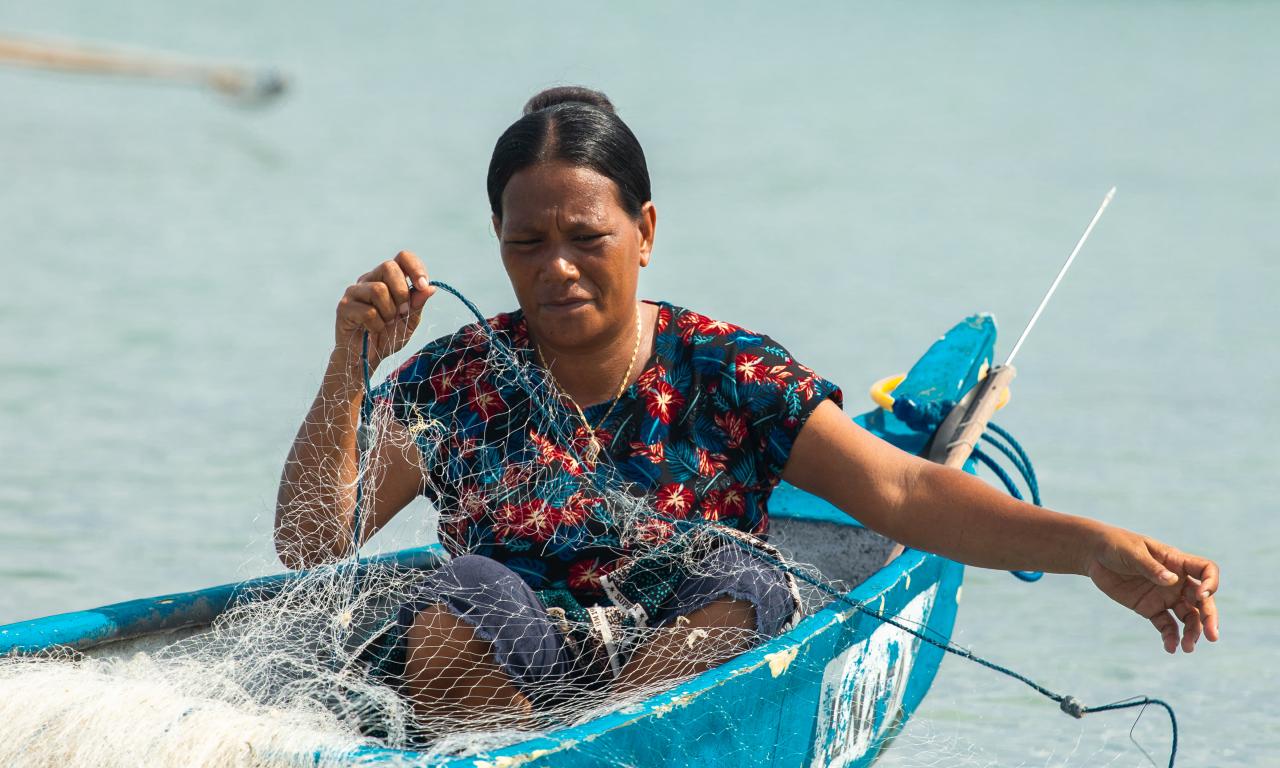
For Xandriña da Conceição, fishing isn’t just work. It is how her family eats, earns, and plans for the future.
Across Timor-Leste, women like Xandriña play an essential role in aquatic food systems, contributing to food security, nutrition, and livelihoods across coastal and inland communities. Their work spans small-scale fisheries, seaweed cultivation, and aquaculture – including harvesting fish, crustaceans, mollusks, and seaweeds, supporting households and local markets.
Despite this, women remain underserved within the sector. Structural barriers, including limited access to productive resources, inputs, markets, and active involvement in decision-making processes constrain their productivity and economic opportunities. These challenges are compounded by climate variability, which is increasingly affecting both marine and inland systems through rising temperatures, flooding, and water scarcity.
Xandriña’s Catch
For Xandriña da Conceição, fishing has been an integral part of her life for many years. She takes an active role in both fishing and seaweed farming, from preparing nets and boats to managing the catch and selling it at market. Working alongside her husband, she ensures that every part of the day’s catch, whether hers or theirs, supports trthe family. She also oversees every step of seaweed cultivation.
Being involved in fishing has supported her family's economy, helping cover daily needs like food, school supplies, and supporting extended family members. She has also been able to contribute to building their house. "Being involved in fishing has empowered me in many ways, allowing me to stand strong alongside my husband as we work together to support our family," she says.
The biggest challenge for her and her family is their heavy reliance on the ocean for both income and food. When the ocean is too rough due to strong winds, waves or stormy weather they are left without a catch, negatively impacting their livelihood and daily sustenance.
"Changing ocean conditions due to the wind are difficult to predict, and I can only recognize the changes by observing the ocean trends."
There are no weather reports available to help her predict the ocean conditions.
Another challenge is the cost of fishing equipment. She and her husband have long planned to buy an engine for their small boat, but saving money is difficult, as most of their income is spent on food and school necessities. This limits their ability to fish effectively.
Still, her message to other women is:
"Despite all the challenges we face, we must not stop doing what we love to support our families. We must continue working to provide for the progress of our families, especially our children, ensuring they get the education they deserve and receive proper nutrition for their growth."
Rosita’s Seaweed Business
Rosita Gomes from Ilicnamo, Atauro, began seaweed farming through a village group. She gradually built her skills to independently manage the entire process, from tying seedlings and planting them in the ocean to harvesting, drying, and selling. Today, she sells fresh seaweed at the Beloi market and dried seaweed to Cottonii, a local social enterprise that supported her early training.
As a single woman, Rosita takes on all responsibilities herself, including the physically demanding task oftransportating the seaweed.
Her work provides income for food, housing materials, and her nieces’ education. She has also reinvested in her business, purchasing ropes and even a small boat to sustain and expand her production.
“I am proud of myself because all the effort I’ve put into seaweed farming has provided me with income to cover various needs. I also used some of my income to purchase a small boat for $250 USD, which helps me continue cultivating seaweed efficiently,” she says
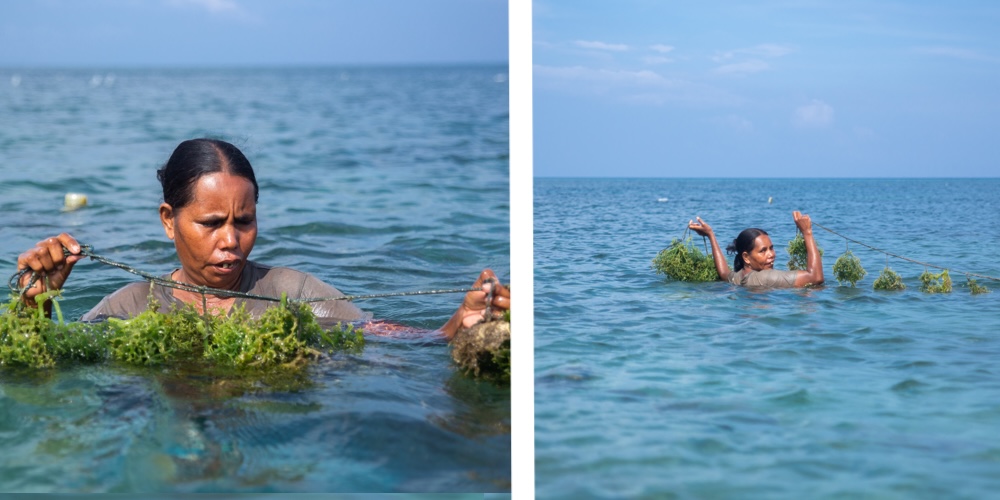
Even with her dedication, like Xandriña, Rosita still faces many challenges in her work. Limited road access and market fees reduce her profits, while high transportation costs prevent her from accessing larger, more competitive markets. Climate-related impacts, including rising sea temperatures causing ice-ice disease, as well as strong winds and waves, damage seaweed and disrupt production. Health risks, such as infections from marine stings, are also a challenge.
Despite these challenges, Rosita remains determined and sees great potential for women in the sector. With support from WorldFish, delivered through local partners like Cottonii via interventions such as trainings and access to seedlings, she has grown her business. She believes women can make a meaningful impact:
‘’We have the capacity to learn and improve our lives. With motivation, support, and hard work, we can cultivate seaweed, generate income, support our families, and give our children a good education and proper nutrition.”
Drawing from her experience, Rosita emphasizes the need for continued support from agencies and the government, including access to essential tools like buckets, ropes, flashlights, nets, small canoes, boat engines, and help installing ocean structures to secure seaweed ropes.
Looking Ahead: Investing in Women for a Sustainable Future
What women like Xandriña and Rosita need is practical investment, including better access to equipment, climate information, markets and training. Strengthening women’s roles in aquatic food systems isn’t just about supporting individual livelihoods, it is about building resilient communities and sustainable food systems. Women like Xandriña and Rosita demonstrate how determination, skill, and innovation can turn challenges into opportunities, providing nutrition, income, and empowerment for their families.
Investing in women with the right tools, training, and resources, strengthens livelihoods and builds more inclusive aquatic food systems in Timor-Leste. Both Xandriña and Rosita have received technical training on climate-resilient seaweed farming, access to improved seaweed seedlings, and gender equality training through the Ikan Adapt project. To date, the project has reached 10,542 beneficiaries, including 5,397 women.
Xandriña da Conceição aboard a boat off the coast of Atauro Island, Timor-Leste. Photo: Ana Pinto da Silva, WorldFish.