
Eunice Ayo-Aderele
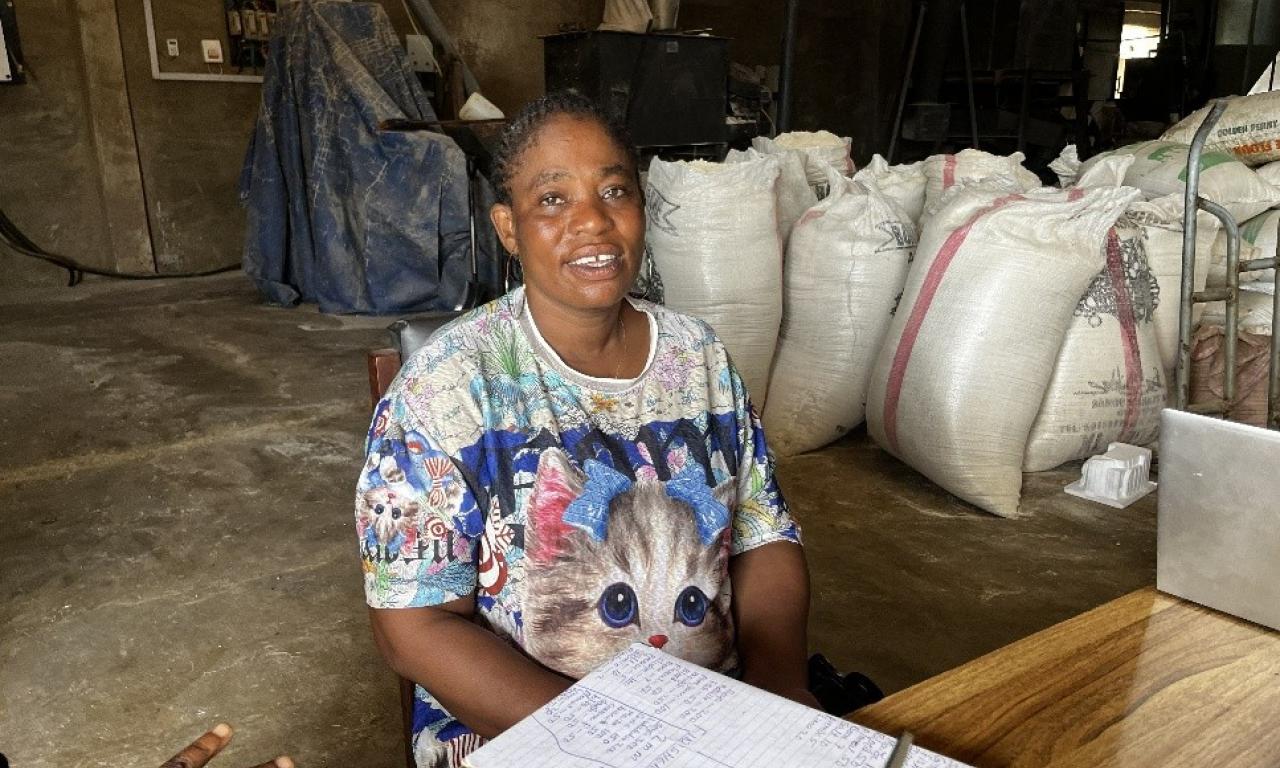
Fish feed is one of the biggest costs facing aquaculture producers in Nigeria. New fieldwork by WorldFish and partners in Lagos and Oyo states is helping identify why locally produced feed remains expensive, and what needs to change for more affordable, sustainable and climate-resilient feed systems to scale. The Development and Scaling of Sustainable Feeds for Resilient Aquatic Food Systems in Sub-Saharan Africa (FASA) project has taken this question into the field through its climate change deep-dive work in Nigeria. Implemented across Lagos and Oyo states, the fieldwork focuses on collecting data to strengthen sustainable aquaculture practices and inform climate-resilient feed solutions.
Led by field supervisor Dr. Musa Wakili of the Agricultural Research Council of Nigeria, the initiative combined planning with on-the-ground engagement. Over a two-week period, trained enumerators conducted surveys and interviews with fish farmers, feed producers, and transporters, building a comprehensive picture of the pressures affecting the aquaculture value chain.
The FASA project, implemented by WorldFish in partnership with Norad (Norwegian Agency for Development Cooperation), aims to develop and scale low‑cost, nutritious, and environmentally sustainable fish feeds made from locally available ingredients. In Nigeria, this ambition depends heavily on understanding how feeds are currently produced, what constraints operators face, and how climate and environmental factors affect both cost and quality.
In Oyo State, 40 fish farmers and 10 feed-related actors were interviewed, while Lagos State accounts for 80 farmers and an additional 10 stakeholders. Organized by FASA implementing partner NAGI Consultancy, the Nigeria deep dive combined quantitative surveys with qualitative interviews designed to feed into life‑cycle assessment (LCA) and broader analysis of climate resilience in the aquaculture feed value chain.
Enumerators visited fish farmers and feed producers in communities including Ido and Oluyole in Oyo State, and Ikorodu, Alimosho, Epe, Agege, and Egbeda in Lagos State.
The engagement included site visits to observe feed production processes, ingredient sourcing, and farm-level practices. This approach ensures that the data collected is not only robust but also grounded in real-world operational contexts.
Importantly, the fieldwork emphasized documentation and learning. Enumerators captured observations through interviews, photographs, and process documentation, contributing to a rich evidence base for future analysis. The experience brought to life one of FASA’s core commitments: Grounding innovation and policy recommendations in the realities of the people who produce, move, and use aquaculture feed every day.
From Research Design to Real‑World Systems
What stood out immediately was the diversity of feed operations: from smallholder farmers milling feed on‑farm with basic equipment, to commercial producers experimenting with alternative ingredients to manage rising costs.
Across interviews, feed millers described similar pressures, including volatile ingredient prices, dependence on imported inputs, inconsistent quality of local raw materials, and energy costs that directly affect profitability.
Describing her experience as a fish farmer and feed miller, Gloria Akanji, CEO of Ibadan, Oyo State-based Segglo Global Venture Nig. Ltd said,
“In fish feed, aroma is of the essence. If fish must be attracted to the feed, the aroma must be pleasing to their senses; otherwise, it will be a wasted effort if fish do not eat the feed.”
She explained that beyond acting as a critical, high-quality, and digestible protein source, the aroma of fish meal makes fish swim towards the pellets each time feed is poured into the pond during feeding.
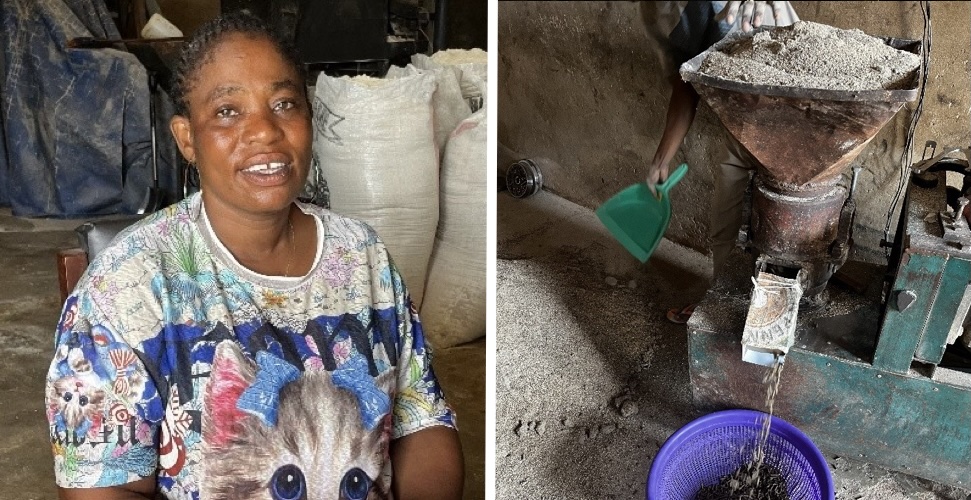
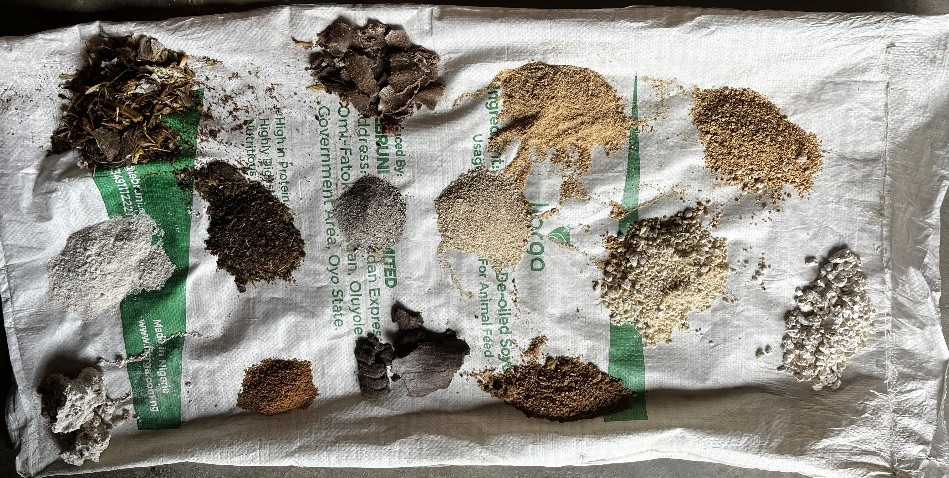
Another fish feed miller, Moshood Sulaimon, of Positive Changes Farm, Ikorodu, Lagos State, said, except for maize, many other fish feed ingredient is from food by-products, including dried cassava peels, blood meal, cassava grains from processed cassava (gari), soybean meal, groundnut cake, bone meal, oyster shells, and poultry offal, among others.
Transporters interviewed by the enumerators described how high fuel prices shape the cost of moving ingredients and finished feed.
Feed millers also pointed to rising energy costs, with many relying on electricity from the national grid, along with firewood, coal and diesel-powered generators, which cost several thousands of dollars monthly.
“All these factors are responsible for the high cost of fish feed, even when locally produced,” Ikorodu, Lagos-based farmer-producer Olatoye Fajimi told the enumerators.
These insights reinforce why FASA’s focus on locally sourced feed ingredients is not only an environmental intervention, but an economic one, particularly for small and medium aquaculture enterprises that operate on thin margins.
Evidence for Sustainable Scaling
During qualitative interviews, enumerators didn’t just ask questions; they observed production processes, inspected facilities, and documented how ingredients are sourced, stored, and formulated. This detailed, on‑the‑ground data directly supports one of FASA’s core deliverables: generating evidence to inform the design, testing, and scaling of sustainable fish feeds.
The interviews also explored awareness and use of climate‑smart practices, linking feed production to wider agricultural and environmental conditions. Producers spoke about rainfall variability, storage challenges during humid seasons, and the knock‑on effects of climate stress on ingredient availability.
As Omotola Bolanle, owner of Ibadan-based DeeBee Feed Mills said, “Unstable prices of raw materials are a big problem in fish feed formulation. The problem is so big that a client’s capital will dictate how rich their fish feed will be.” These realities underscore the importance of embedding climate resilience into feed system innovation—another key outcome area for FASA.
Equally important is how this evidence will be used. Findings from Lagos and Oyo states will feed into comparative analyses across Nigeria, Kenya, and Zambia, ensuring that recommendations emerging from FASA are context‑specific yet scalable. For policymakers and private‑sector actors alike, this kind of grounded data is essential for reducing risk and encouraging adoption.
People at the Center of Feed Innovation
What the fieldwork made clear is that sustainable feed systems are built by people, not just formulas. From millers transporting feed across long distances to farmers adapting formulations based on trial and error, local actors are already innovating, often without formal support. FASA’s deliverables respond directly to this reality by placing producers at the center of research, rather than at its margins.
Many respondents welcomed the opportunity to share their experiences and challenges, signaling a readiness to engage with solutions that reflect their lived realities. As FASA continues to advance, these field activities will play a pivotal role in shaping climate-smart, locally adapted feed solutions. By grounding innovation in data and farmer realities, the project is helping to build more resilient, efficient, and sustainable aquatic food systems in Nigeria and beyond.
Cover photo: CEO of Segglo Global Venture Nig. Ltd.,Gloria Akanji. Photo: Eunice Ayo-Aderele/WorldFish.