
Sarah Fernandes
How do you move from collecting fisheries data to building systems that governments can sustain, adapt, and scale?
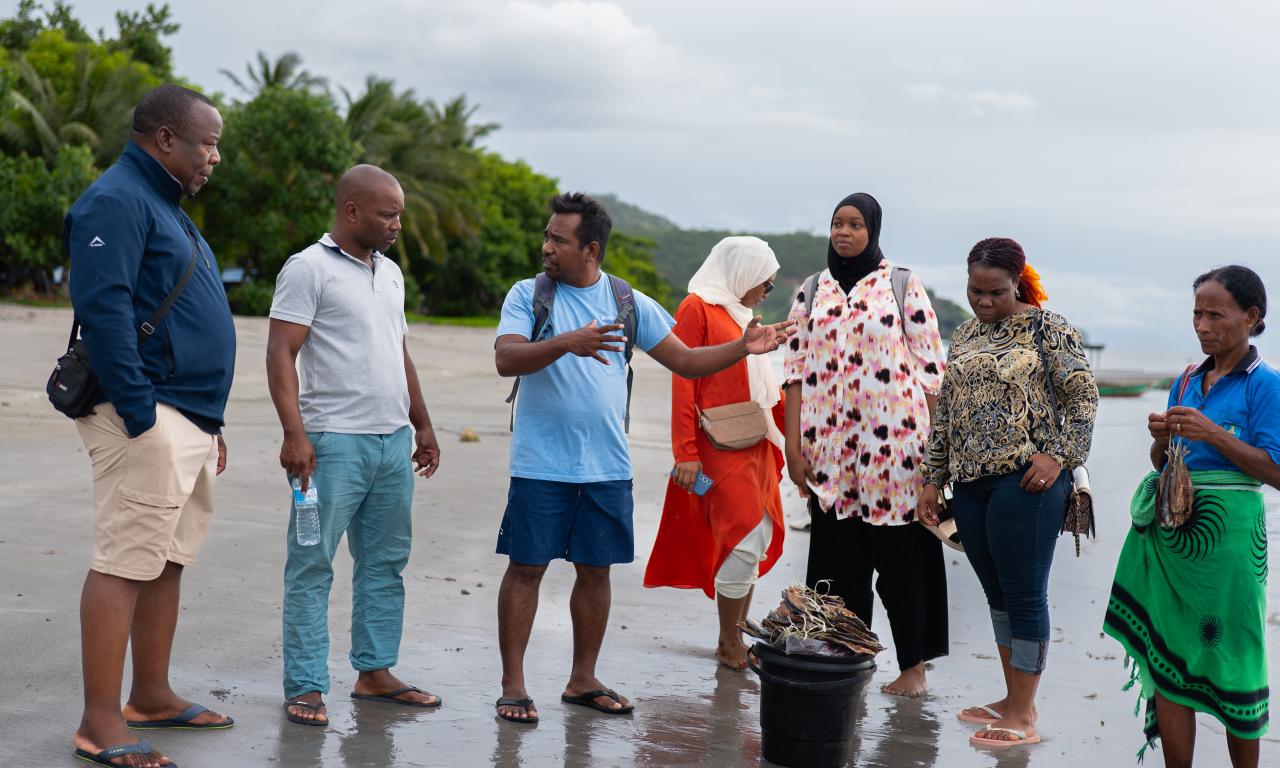
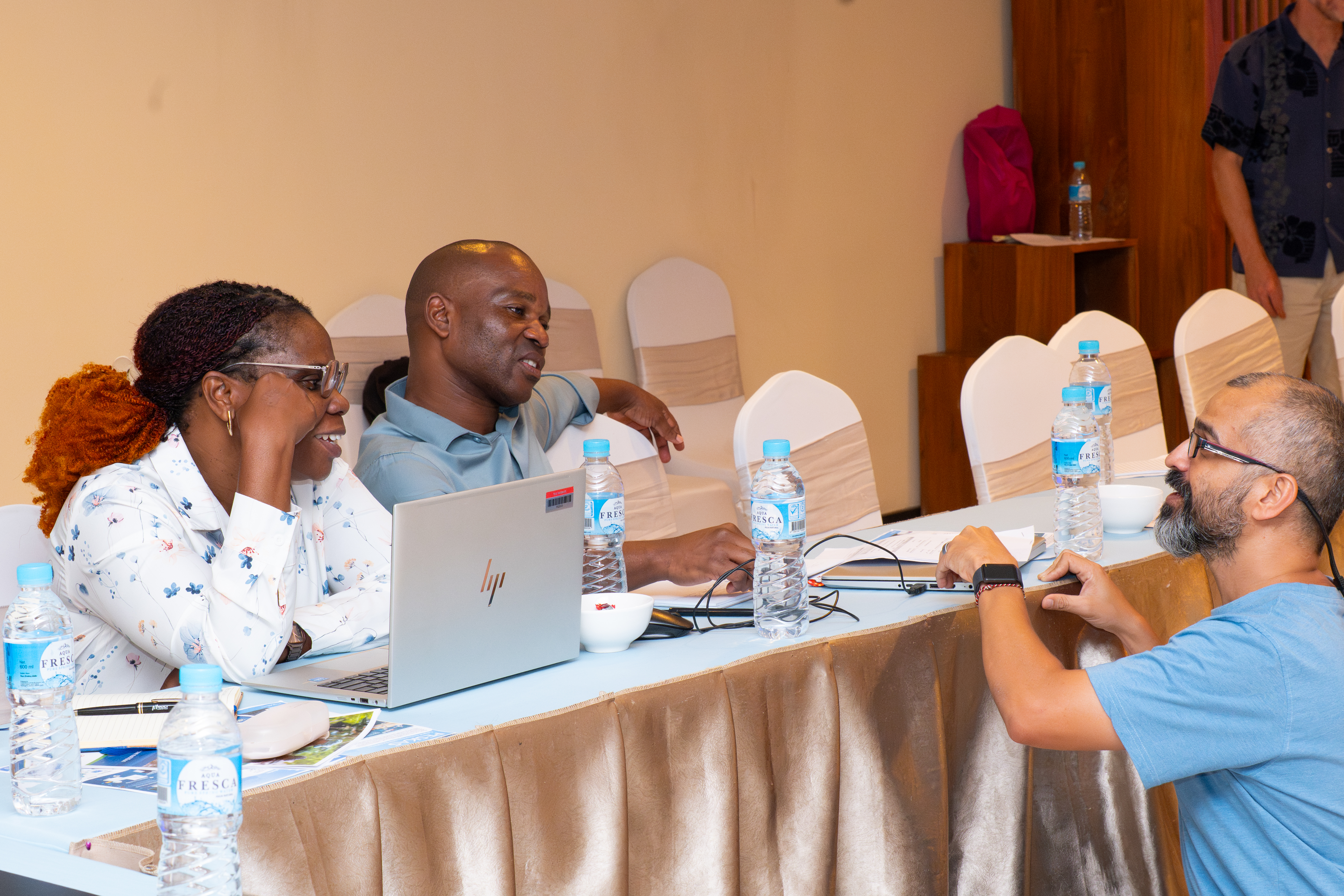
This was the central question guiding a recent knowledge exchange in Timor-Leste, where four African delegates from Zanzibar, Tanzania and Mozambique joined national stakeholders under the Asia–Africa BlueTech Superhighway (AABS) project.
Salwa Abdulla, and Jamila Ali, representatives from the Ministry of Blue Economy and Fisheries (Zanzibar) and Nelson Cumbe and Beatriz Macuacua from Mozambique’s National Directorate of Fisheries and Aquaculture and implementing partner for AABS ADNAP joined the exchange. Along with government representatives, technical leads, and project partners, they explored how digital systems like Peskas, developed by WorldFish, are transforming fisheries management and what it takes to make them work across different national contexts.
Innovation to Infrastructure
In Timor-Leste, Peskas has evolved from a pilot into a national digital fisheries system, integrating:
- Mobile-based catch data collection
- Vessel tracking and effort monitoring
- Automated validation and analytics
- Dashboards that inform policy and planning
The system now draws on eight years of fisheries data, supporting national reporting, informing strategy, and contributing to broader blue economy priorities. But as discussions throughout the exchange made clear, the real challenge is no longer innovation, it is sustainability.
Participants explored the true cost of maintaining and scaling digital systems, and how these can be embedded into government budgets and institutional frameworks.This marked a broader transition from project-based solutions to public digital infrastructure owned and sustained by governments. This shift from project to public infrastructure was a shared priority across all countries represented.
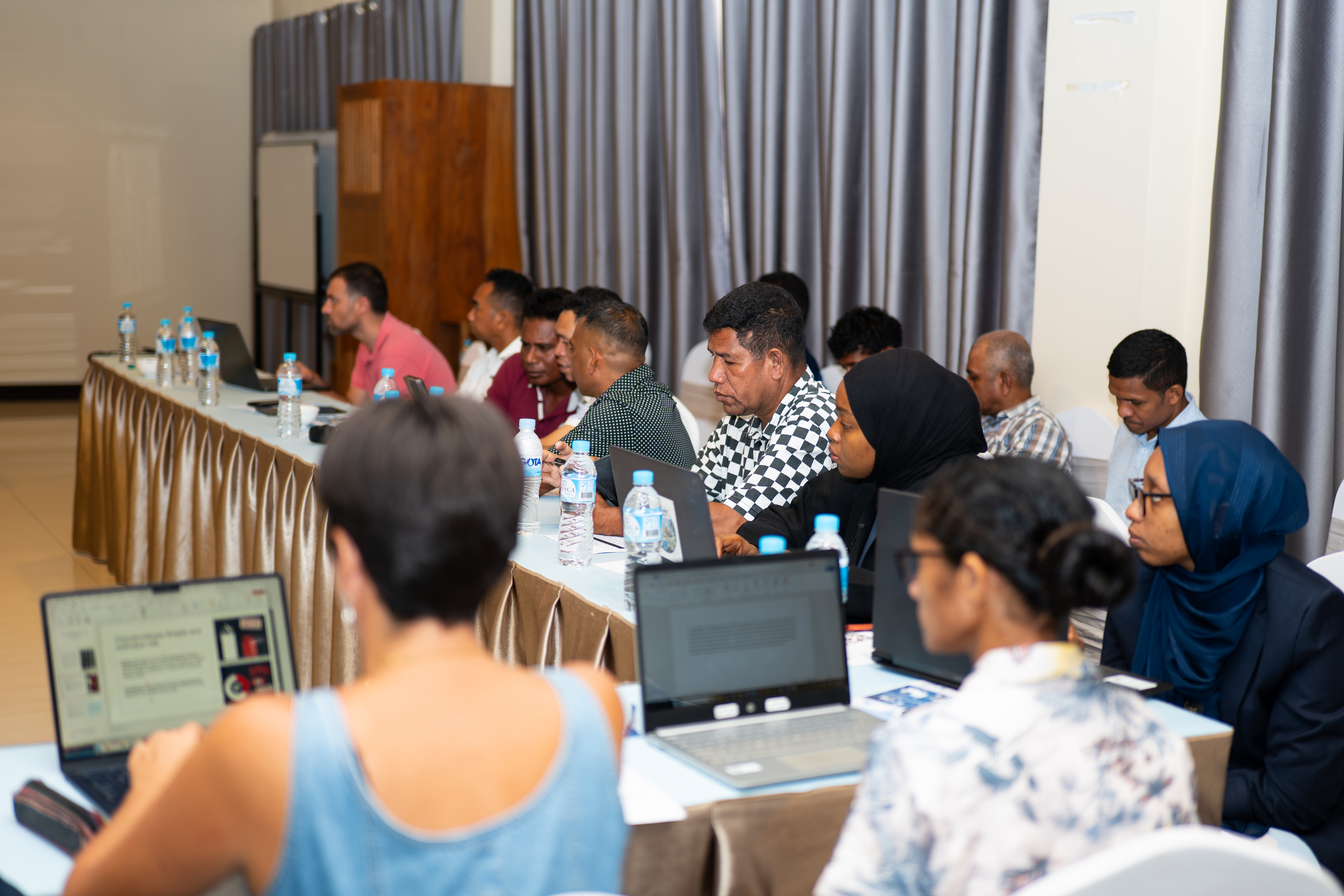
Learning Across Contexts, not Copying Solutions
For delegates from Zanzibar and Mozambique, Timor-Leste offered a valuable window into what a more mature digital fisheries system looks like in practice.
They explored how Peskas has been embedded within government workflows, how data is actively used to inform policy and decision-making, and how challenges evolve over time, particularly in relation to governance and long-term system maintenance.
At the same time, African delegates brought critical insights from their own implementation experiences.
Beatriz Macuacua, one delegate from Mozambique reflected:
"The knowledge exchange helped us strengthen how we validate artisanal fisheries data and reduce errors - we can now improve on how we generate reports to meet national needs.”
In Zanzibar, digital tools are already supporting both fishers and government by helping track fishing activity, identify productive areas, improve efficiency, and reduce time spent at sea.
Across all sessions, a consistent takeaway emerged: these systems are not one-size-fits-all, and their strength lies in their adaptability to national priorities, capacities, and realities.
Behind the Data: The Human Core of Digital Fisheries
While Peskas is often described in technical terms, the exchange emphasized the people behind the system.
Enumerators, responsible for collecting fisheries data at landing sites, are central to the system’s success. Their work transforms daily fishing activity into structured datasets that inform national decision-making.
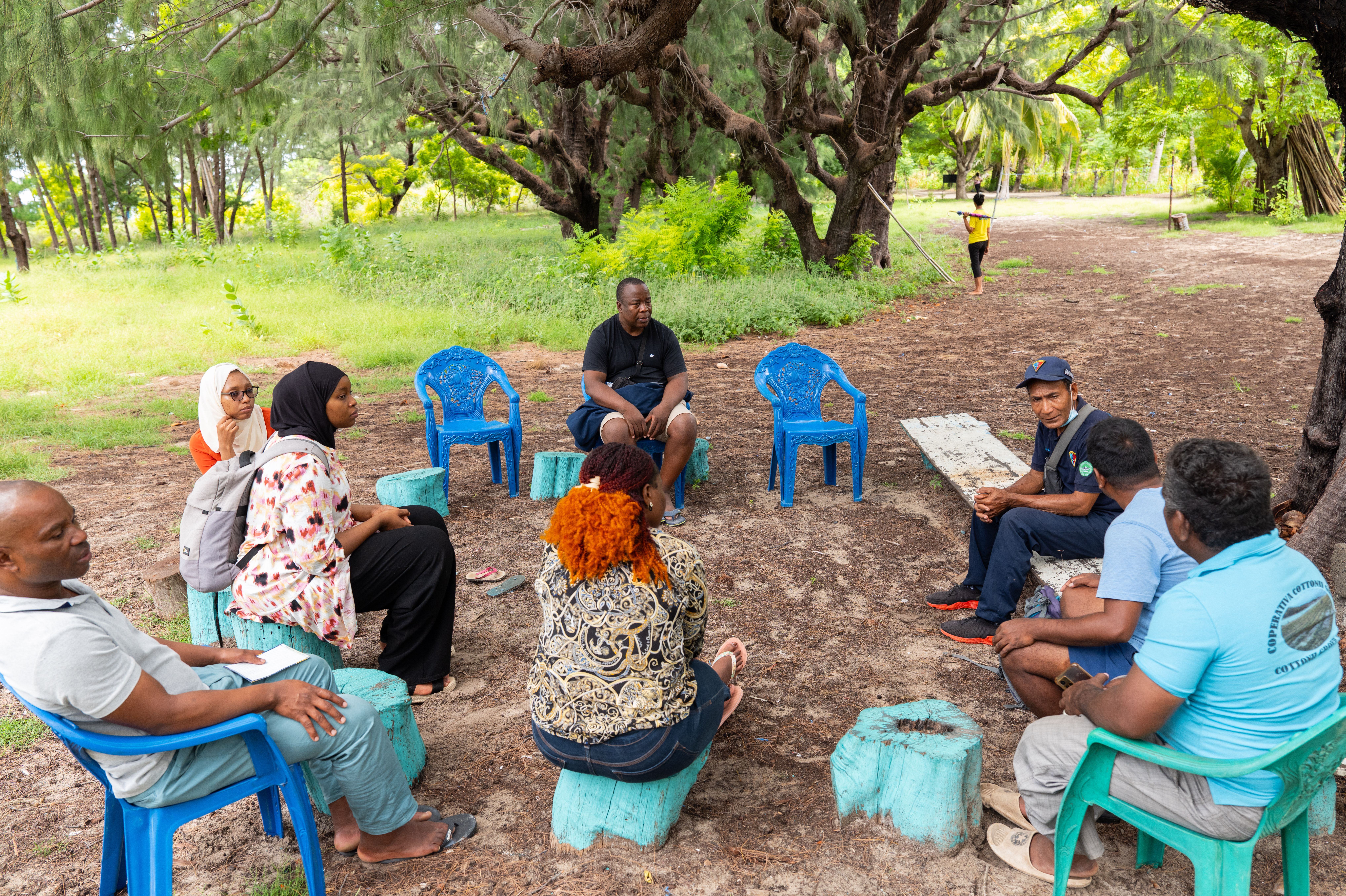
At the same time, participants identified key challenges:
- High workloads across multiple landing sites
- Limited access to the data they collect
- Species identification in the field
- The need for continuous training and support
There was strong consensus that improving feedback loops and communication, including giving enumerators access to their own data, would significantly strengthen system performance.
As Alex Tilley, Senior Scientist noted:
“The system can only be optimised with feedback from the people that are using it day to day.”
This reinforced a critical insight: digital systems are only as strong as the people who sustain them.
Integration, Governance, and the next Phase of Digital Systems
As digital fisheries systems advance, the focus is moving beyond data collection toward integration, governance, and long-term resilience.
Priorities identified during the exchange included:
- Linking fisheries data with aquaculture, biodiversity, and climate datasets
- Harmonising data formats across institutions
- Ensuring data sovereignty through national hosting and management
Delegates from Mozambique highlighted ongoing challenges with fragmented datasets and data loss - reinforcing the importance of secure, integrated systems.
At the same time, there was growing interest in expanding Peskas to include aquaculture, reflecting broader shifts toward more holistic aquatic food systems.
From Systems to Livelihoods: Lessons from Atauro Island
A field visit to Atauro Island grounded these discussions in real-world experience.
Delegates engaged directly with coastal communities, observing how fisheries data systems intersect with livelihoods, including seaweed farming initiatives, many led by women.
“We saw how important women are in the value chain and how these activities improve well-being. These are lessons we can adapt in Zanzibar,” shared Jamila Ali, a delegate from Tanzania.
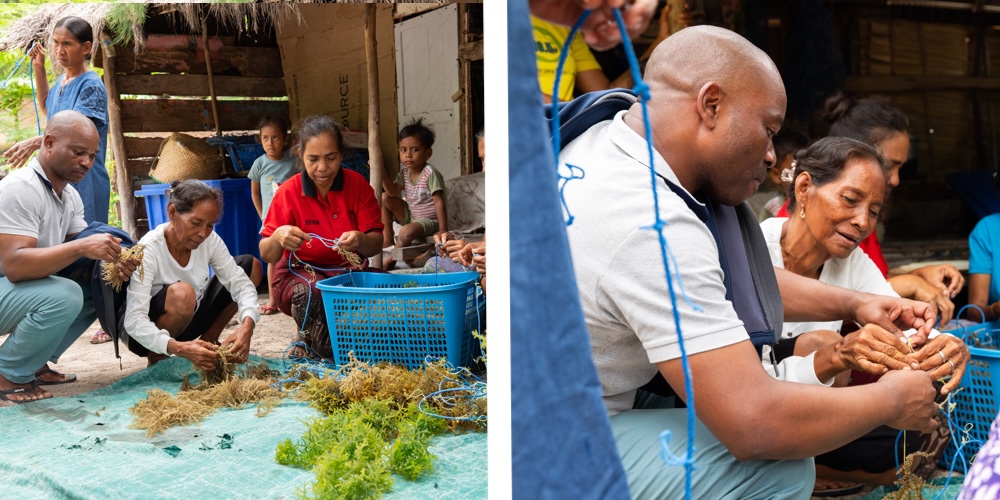
The visit reinforced a critical point: digital systems like Peskas are only meaningful when they connect to people’s lives, livelihoods, and local economies.
From Exchange to Action
This knowledge exchange was not just about sharing experiences - it was about shaping the future of digital fisheries systems.
Participants identified priorities including strengthening financing pathways, integrating systems into policy frameworks, improving coordination, and anticipating technical and institutional challenges. There was also strong emphasis on building and sustaining partnerships, including potential collaboration with regional initiatives.
Insights from across countries highlighted that strong partnerships between governments and fishing communities, supported by digital tools, are essential for improving both efficiency and sustainability.
A Shared System, Shaped by Many Countries
What is emerging through AABS is a shared digital system for fisheries - one that is co-developed, continuously improved, and shaped by multiple countries.
Peskas provides the foundation, but its strength lies in its adaptability:
- Each country customises it to their needs
- Each implementation generates new learning
- Each exchange strengthens the system as a whole
Salwa Abdulla, a delegate from Tanzania mentioned “Sharing experiences and working together is really important so we can apply what we’ve learned in our own country.”
Why it Matters
Small-scale fisheries remain one of the most important and under-documented sectors globally.
By connecting countries through systems like Peskas and through exchanges like this there is a clear pathway to improving data quality, strengthening evidence-based policy, and supporting more sustainable and resilient coastal livelihoods.
The experience in Timor-Leste shows that this transformation is already underway.
Not through isolated innovation, but through shared learning, collaboration, and a commitment to building systems that last.
Building on the 2024 knowledge exchange in Timor-Leste, this visit reflects two years of progress under the AABS project in advancing digital fisheries monitoring across partner countries. What began as an introduction to Timor-Leste’s Peskas system has now evolved into a deeper exchange focused on implementation, adaptation, and system strengthening. The workshop therefore served not only as a learning platform, but as a space to reflect on how far the participating countries have come in testing and contextualizing digital tools within their own fisheries systems, and how these experiences are now informing the next phase of scaling, integration, and institutional ownership of digital fisheries data systems.
Cover photo: Regional delegates from Zanzibar and Mozambique join Timor-Leste counterparts to exchange lessons on scaling digital fisheries systems. Photo: Philipo Ngonyani/WorldFish.